We’ve learned that when companies treat talent as a commodity, the consequences are severe,” said Ms. Toledano of Electronic Arts. “It takes years to repair a reputation.
with a grain or three, of salt…
We’ve learned that when companies treat talent as a commodity, the consequences are severe,” said Ms. Toledano of Electronic Arts. “It takes years to repair a reputation.
…there’s a difference between hard work and hard to do work:
Hard work is deliberate practice. It’s not fun while you’re doing it, but you don’t have to do too much of it in any one day (the elite players spent, on average, 3.5 hours per day engaged in deliberate practice, broken into two sessions). It also provides you measurable progress in a skill, which generates a strong sense of contentment and motivation. Therefore, although hard work is hard, it’s not draining and it can fit nicely into a relaxed and enjoyable day.
Hard to do work, by contrast, is draining. It has you running around all day in a state of false busyness that leaves you, like the average players from the Berlin study, feeling tired and stressed. It also, as we just learned, has very little to do with real accomplishment.
This analysis leads to an important conclusion. Whether you’re a student or well along in your career, if your goal is to build a remarkable life, then busyness and exhaustion should be your enemy. If you’re chronically stressed and up late working, you’re doing something wrong. You’re the average players from the Universität der Künste — not the elite. You’ve built a life around hard to do work, not hard work.
The solution suggested by this research, as well as my own, is as simple as it is startling:
Do less. But do what you do with complete and hard focus. Then when you’re done be done, and go enjoy the rest of the day.
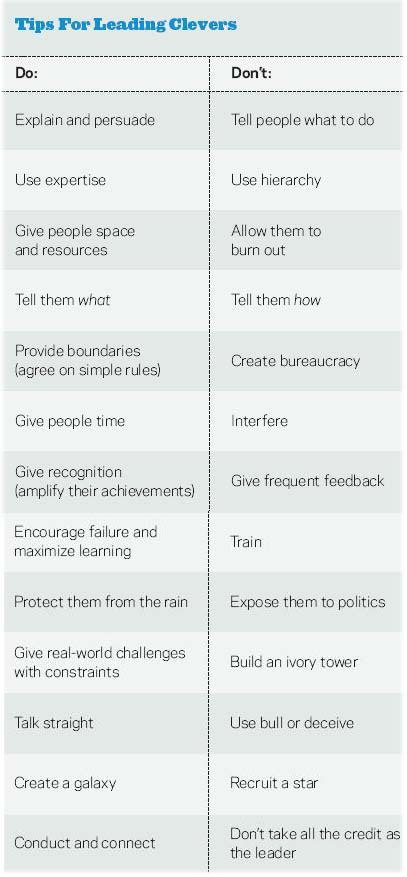
Characteristics of Clever People
How do you know the direction to head with products?
It boils down to taste.
Emerge yourself with the best ideas of humanities. And integrate them. Pull interest from diverse areas.
I will be giving experiences instead of things this year. It’s better for the environment and the soul.
TG: I always grew up liking science fiction films. I never liked the wobbly ones. But I loved the ones like War of the Worlds that were technically well done. And I liked all the bug films as well … the ant and spider ones. So there were quality ones and then there were crap ones like Ed Wood’s films. You know, he was inspired but incredibly untalented. That was a problem. When 2001 came around, that was the moment I felt sci-fi was at its finest, because it was intelligent, and it seemed to be grounded. It wasn’t fantasy, but it was so wild and extreme, it was like fantasy, and that intrigued me. And then George came along and took all the stuff before 2001 and put it together in one film and made it really glossy, and off we went. The world changed. We reverted. But, unlike Star Wars, a lot of the earlier films raised questions.
SR: Well, science fiction is always a vehicle for ideas. It’s the form which allows either movies or books to be an exploration of how we should live.
TG: Exactly. Again, it’s like going back to the question of Where is Brazil? In sci-fi movies, you move beyond the real world so you can abstract it and then comment upon it. Philip K. Dick was always my favorite sci-fi writer because it wasn’t so much about sci-fi as about the human condition.
SR: Yes, do you remember the original title of Blade Runner—which asks an intellectual question?
TG: Do Androids Dream of Electric Sheep? I mean, it’s the difference between 2001 and Close Encounters. 2001 ends with a question. You’re not sure what is going on. There’s been this strange room experience, and then the baby. You kind of feel there’s a rebirth, a new beginning, but you don’t know what it is.
Close Encounters ends with an answer. And it’s… little kids in latex suits that come out and go like that. [Flaps hands.] There’s a moment in Close Encounters before the kids in latex suits come out with the wrinkles on their wrists. When the door first opens, this blinding light comes out and this strange preying mantis figure rises. I would just cut to black at that point and [Gasps.] leave the audience with a gasp. [Gasps again.] And then your brain has to start working and fill in the gaps.
But that’s the problem with films we’re seeing now: they give you all the answers, they plug in all the holes, they don’t make you…
SR: Well, I thought that when…did you see the Kubrick-Spielberg Artificial Intelligence, AI?
TG: Oh God. [Whispers.] What was that?
SR: [Laughs.]
TG: Mr. Articulate speaks.
SR: Well, you answered the question. There’s a moment in that film about thirty-five minutes before the end when the little robot kid decides the world is not worth living in and dives off the building. Now, if the film had ended there, it would have been a lot better—a lot better. And you can’t help feeling that if Kubrick rather than Spielberg had directed the film, that would have been the Kubrick ending. But then there’s half an hour of Spielberg feel-good crap. Blue fairies.
If I look at the range, you’ve got one [constraint] that is art school, I’m doing this for arts sake, Ratatouille and WALL-E clearly fall more on that side, the other is the purely commercial side, where you’ve got a lot of films that are made purely for following a trend,
if you go entirely for the art side then eventually you fail economically. if you go purely commercially then I think you fail from a soul point of view…
we’ve got these elements pulling on both sides, the art side and the commercial side… and the the trick is not to let one side win.
That fundamentally successful companies are unstable. And where we have to operate is in that unstable place. And the forces of conservatism which are very strong and they want to go to a safe place. I want to go to the same place for money, I want to go and be wild and creative, or I want to have enough time for this, and each one of those guys are pulling, and if any one of them wins, we lose. And i just want to stay right there in the middle.

Watching her, Brimstone added, “I hope, child, but I don’t wish. There’s a difference.”
She turned this over in her mind, thinking that if she could come up with a difference, it might impress him. Something occurred to her, and she struggled to put it into words. “Because hope comes from in you, and wishes are just magic.”
“Wishes are false. Hope is true. Hope makes its own magic.”
I’ve lived in Paris for six years, and I’m sorry to say that the Ugly American syndrome still exists. Sometimes you just want to say “Stop destroying the landscape with your outfit.” Still, from a design standpoint, I’m tempted to redo the fanny pack. I look at it as a challenge—it’s something to react against.
Rick Owens
(Thanks filthavenue.tumblr.com)

 Wandering Wandering Star