Your brain is constantly rewiring itself based on daily life. In the end, what we pay the most attention to defines us. How you choose to spend the irreplaceable hours of your life literally transforms you.
The Brain On Love
Your brain is constantly rewiring itself based on daily life. In the end, what we pay the most attention to defines us. How you choose to spend the irreplaceable hours of your life literally transforms you.
The Brain On Love

Must ask Koichi-san if a portable headphone amp is possible…
The Internet is the world’s greatest collection of knowledge, but increasingly, that wisdom lives in walled off apps. It lives in services and platforms. Places where we build up relationships, express preferences, and reveal so much about ourselves. We’re on Foursquare and Netflix and Facebook and Twitter and Skype. We’re interacting in real time, and in ways that don’t lend themselves well to indexing. Google can’t know exactly what’s going on in all those places. How the links between entities work. What and who we like and dislike. There is information there that it can’t index. And if it can’t index it, or understand it, it damn sure can’t serve an ad.
Trouble is, that hard-to-index information is key to Google’s future. Mountain View may not be all about search anymore, but it desperately wants to be able to answer real world questions for you; there’s a huge difference. Search is just about retrieving information. Actually answering subjective questions requires a deep knowledge of the person doing the asking: Where you are, who your are friends, what your interests are, what you like and don’t like.
Picture this scenario. You are about to leave San Francisco to drive to Lake Tahoe for a weekend of skiing, so you fire up your Android handset and ask it “what’s the best restaurant between here and Lake Tahoe?”
It’s an incredibly complex and subjective query. But Google wants to be able to answer it anyway. (This was an actual example given to me by Google.) To provide one, it needs to know things about you. A lot of things. A staggering number of things.
To start with, it needs to know where you are. Then there is the question of your route—are you taking 80 up to the north side of the lake, or will you take 50 and the southern route? It needs to know what you like. So it will look to the restaurants you’ve frequented in the past and what you’ve thought of them. It may want to know who is in the car with you—your vegan roommates?—and see their dining and review history as well. It would be helpful to see what kind of restaurants you’ve sought out before. It may look at your Web browsing habits to see what kind of sites you frequent. It wants to know which places your wider circle of friends have recommended. But of course, similar tastes may not mean similar budgets, so it could need to take a look at your spending history. It may look to the types of instructional cooking videos you’ve viewed or the recipes found in your browsing history.
It wants to look at every possible signal it can find, and deliver a highly relevant answer: You want to eat at Ikeda’s in Auburn, California. Hey, I love that place too! Try the apple pie.
There is only one path to that answer, and it goes straight through your privacy. Google can’t deliver this kind of a tailored result if you’re using all kinds of other services that it doesn’t control. Nor can it do it if you keep your Google services separated. You have to do all the things you used to do elsewhere within the confines of one big information sharing service called Google.
The Internet of Things will produce data sets like we’ve never seen before, but that doesn’t necessarily mean we will have more meaningful products. So the question becomes, how can we design connected objects with meaning and mechanics to make people engage in better behavior?
Matt Rolandson says, “The first step is to put meaning on the agenda in the product development process, as emotional and philosophical intention, by encouraging designers with ideas about how to manage intention and awareness. A lot of what is developed today uses the triggers of fear or social stress.
“We could instead design products and services that help people get more meaning by visualizing the bigger picture, connecting services or products to some sense of larger purpose. And then coach them to behavior modification, collectivizing intent instead of competition. The key question to ask ourselves as designers is: How is the network you are creating allowing users to experience power — are they reinforcing a positive identify for themselves or the exact opposite?”
Can the Internet of Things become a movement with a positive impact on our lives? And what can we learn from Buddhism to help make that happen?
As Vincent Horn says, “Buddha was the original mind-hacker—a proto-scientist of the mind. We have been through several revolutions, including in the physical sciences with Galileo, and in the biological sciences with Darwin and his theory of natural selection and evolution. But we have not yet had a revolution in the mind sciences. Now, we are on the brink of a possible exciting revolution in that area. Meditators are being studied by mind scientists to see the actual benefits of meditating and how it impacts the brain. Hopefully, that will lead to technologies that help us become more awake to our senses.
“From a Buddhism perspective, everything rests on the tip of intention. Buddhists look at actions and connections as internally generated. If we become aware of that, train our minds and explore ourselves, we will move from being self-centric to self-aware and thereby become more aware of ourselves in relation to other things. Being aware of how things are connected has the potential to make us less self-centric if designers and developers build experiences with those ideas in mind.”
By Sara Öhrvall http://bit.ly/GV0uRe
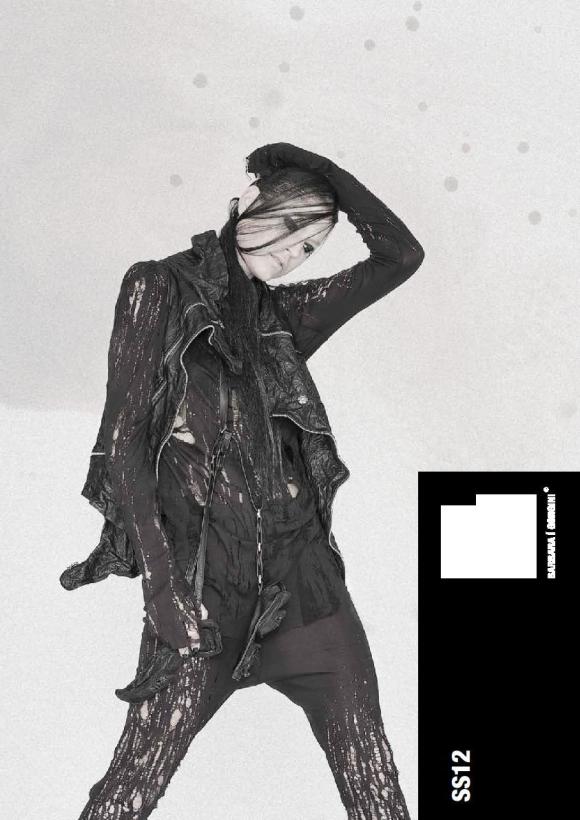
Barbara Í Gongini








“Bound” – the collection is built around ideas of coiled distortions of the body with a twist of bondage in an array of leathers and stone washed wools.
–
Q&A w/ Richard Söderberg, designer of Obscur
How would you describe your approach to clothes?
Frankly, it is a love-hate relationship. Furthermore, it is also one that is very profound, yet subtly damaged. I never look at the neck tag, instead when I see something that I like I get an extreme hunger for turning the garment inside-out and solving the puzzle of its creation. Once it’s solved I can move on. This is also one of the reasons I always find my own garments non-satisfactory because I know every seam inside of it.
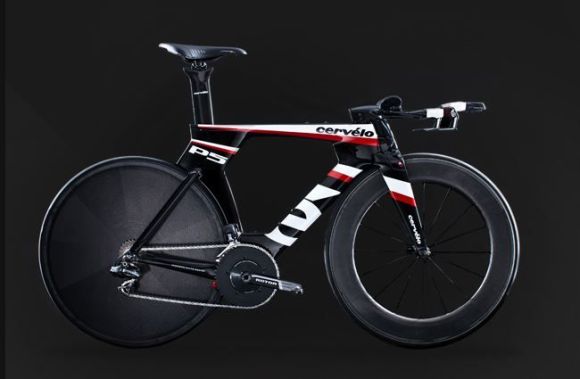
Just begging and pleading to be tagged w/ KRINK markers.





It’s going to be the year of obscur & boris. Wire-boned zippers, leather thumb-holes…


 Wandering Wandering Star