
Vex, in the morning sunlight, doing his best 1-Bit Batman pose.
Vex, in the morning sunlight, doing his best 1-Bit Batman pose.
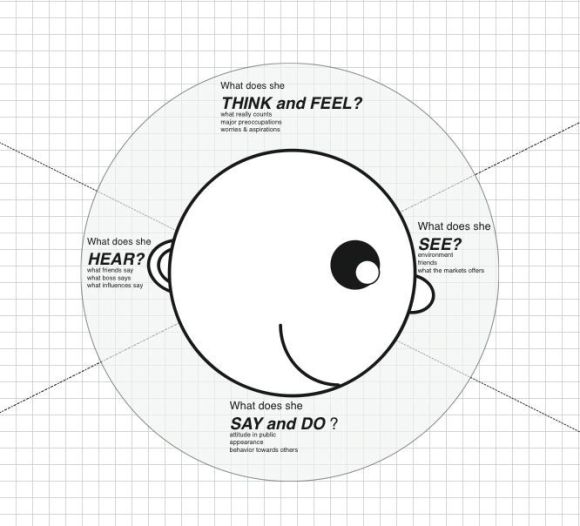
Seriously? Really? What is that thing in the middle?
Goal: Understand What Your Stakeholders Want From Your Business In an ideal world, you could perfectly understand what the stakeholders in your company want from your product or service. Unfortunately, this is difficult to fully accomplish, as the expectations of those integral to your business are often not apparent until a change has already been made – for better or for worse. You can collaborate with your stakeholders or your own internal team – taking the perspective of your customers or business partners – to strategically analyze the desires and needs of those important to your company, and to uncover ways to improve your product or service.

Begin the game by creating an empathy map on a large white board or poster. Draw the profile of a head with physical features such as eyes, ears, a mouth, and a nose; this will help players identify with the character and project themselves into it to form more accurate ideas.
Divide the map into five sections, portraying what the targeted persona sees, thinks/feels, hears, gains, and is challenged by. Throughout the game, have your players write their ideas about the character’s experiences on sticky notes, which they will then stick onto the respective section of the empathy map. Ask them to look into the mind of the targeted persona and think about the sensory experiences of the character. Consider what the figure is observing from your company. Is it hearing good things from external sources? What does it want to gain from your services?
This game works best when players genuinely work to uncover the impactful sensory information your stakeholders process. Project yourself into the persona and empathize with it to understand how you can improve your product or service. Once the chart is complete, work as a team to analyze your empathy map and to think of how to apply the results to your product.
The Empathy Map is applicable to any business, as it provides insight into key players who are necessary for your company’s success. Learn how to provide a better user experience by viewing the perspective of your stakeholders and identifying how to improve what they see, hear, think, gain, and are challenged by. Through the extensive collaboration and visual organization involved in this game, players are able to form a deeper understanding about what customers and business partners truly want from your company.
…if your goal is to build a remarkable life, then busyness and exhaustion should be your enemy.
If you’re chronically stressed and up late working, you’re doing something wrong. You’ve built a life around hard to do work, not hard work.
–
Hard work is deliberate practice. It’s not fun while you’re doing it, but you don’t have to do too much of it in any one day (the elite players spent, on average, 3.5 hours per day engaged in deliberate practice, broken into two sessions). It also provides you measurable progress in a skill, which generates a strong sense of contentment and motivation. Therefore, although hard work is hard, it’s not draining and it can fit nicely into a relaxed and enjoyable day.
Hard to do work, by contrast, is draining. It has you running around all day in a state of false busyness that leaves you, like the average players from the Berlin study, feeling tired and stressed. It also, as we just learned, has very little to do with real accomplishment.
Write with the door closed, rewrite with the door open. – Stephen King
We are now capable of collecting and analyzing orders of magnitude more information than at any other time in history. The one constrained resource is understanding.
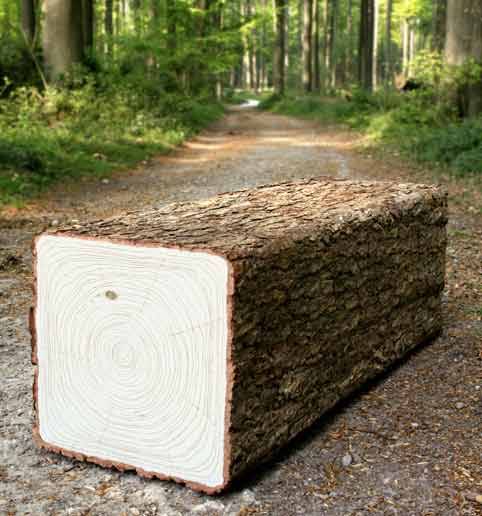
When you see the concept ‘square peg (in square hole)’ materialized, the wrongness is visceral.
What makes the kids market so lucrative is it’s not just a TV show. It’s not just a movie. It’s the whole ecosystem of entertainment. Kids want the action figure, the backpack, the Happy Meal, and the theme-park ride. There are dozens of little touch points, where parents pay for a brand experience and the brand experience is highly emotional. It gets back to kids’ hunger to interact with something they love. What Angry Birds and Cut the Rope are both trying to do is take control of and democratize that part of the equation too.
–
This is where apps like Angry Birds or Cut the Rope have a stranglehold on anyone who markets to children: If brands are being created in the App Store, they have a direct line to kids. Do they really need Mattel, Hasbro, Disney, and Dreamworks? They don’t trust them. “Why enter into a marriage, if you know it’ll only end in divorce?” says Lyalin. (There were a lot more reasons for his mistrust, but that all falls into the off-the-record bucket unfortunately.)
These companies are creating original content. But make no mistake — if they succeed, they disrupt a lot more than just Hollywood.
It’s a dramatically new way of doing business that most toy makers don’t get.
/Is it really just the kids that want the ‘whole ecosystem’? When did that phenomenon start?

 Wandering Wandering Star