Categories
FUCK COMMITTEES
(I believe in lunatics)
It’s about the struggle between individuals with jagged passion in their work and today’s faceless corporate committees, which claim to understand the needs of the mass audience, and are removing the idiosyncrasies, polishing the jags, creating a thought-free, passion-free, cultural mush that will not be hated nor loved by anyone. By now, virtually all media, architecture, product and graphic design have been freed from ideas, individual passion, and have been relegated to a role of corporate servitude, carrying out corporate strategies and increasing stock prices. Creative people are now working for the bottom line.
Magazine editors have lost their editorial independence, and work for committees of publishers (who work for committees of advertisers). TV scripts are vetted by producers, advertisers, lawyers, research specialists, layers and layers of paid executives who determine whether the scripts are dumb enough to amuse what they call the ‘lowest common denominator’. Film studios out films in front of focus groups to determine whether an ending will please target audiences. All cars look the same. Architectural decisions are made by accountants. Ads are stupid. Theater is dead.
Corporations have become the sole arbiters of cultural ideas and taste in America. Our culture is corporate culture.Culture used to be the opposite of commerce, not a fast track to ‘content’- derived riches. Not so long ago captains of industry (no angels in the way they acquired wealth) thought that part of their responsibility was to use their millions to support culture. Carnegie built libraries, Rockefeller built art museums, Ford created his global foundation. What do we now get from our billionaires? Gates? Or Eisner? Or Redstone? Sales pitches. Junk mail. Meanwhile, creative people have their work reduced to ‘content’ or ‘intellectual property’. Magazines and films become ‘delivery systems’ for product messages.
But to be fair, the above is only 99 percent true.
I offer a modest solution: Find the cracks in the wall. There are a very few lunatic entrepreneurs who will understand that culture and design are not about fatter wallets, but about creating a future. They will understand that wealth is means, not an end. Under other circumstances they may have turned out to be like you, creative lunatics. Believe me, they’re there and when you find them, treat them well and use their money to change the world.
Tibor Kalman
New York
June 1998
Categories
Over time, the most skilled players came to inhabit a second tier of reliable competence. Those who succeeded spectacularly – who took their places in the first tier – were often not the most skilled, but rather were those who got some lucky breaks early on or took big risks that happened to pay off. Emulating these top performers would probably lead to disappointment, since imitators would be unlikely to replicate their good fortune.
It’s not a hard and fast rule by any means. Risks are often worth taking, but if you’re looking for a steady advisor you might be better off with the person in second.
// Risk vs Reward, innit?
Categories
Stray “Kongkast #174” (DnB)
Categories




Categories
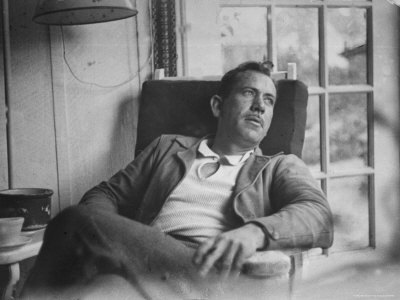
“It has been said often that a big book is more important and has more authority than a short book. There are exceptions of course but it is very nearly always true. I have tried to find a reasonable explanation for this and at last have come up with my theory, to wit: The human mind, particularly in the present, is troubled and fogged and bee-stung with a thousand little details from taxes to war worry to the price of meat. All these usually get together and result in a man’s fighting with his wife because that is the easiest channel of relief for inner unrest. Now—we must think of a book as a wedge driven into a man’s personal life. A short book would be in and out quickly. And it is possible for such a wedge to open the mind and do its work before it is withdrawn leaving quivering nerves and cut tissue. A long book, on the other hand, drives in very slowly and if only in point of time remains for a while. Instead of cutting and leaving, it allows the mind to rearrange itself to fit around the wedge. Let’s carry the analogy a little farther. When the quick wedge is withdrawn, the tendency of the mind is quickly to heal itself exactly as it was before the attack. With the long book perhaps the healing has been warped around the shape of the wedge so that when the wedge is finally withdrawn and the book set down, the mind cannot ever be quite what it was before. This is my theory and it may explain the greater importance of a long book. Living with it longer has given it greater force. If this is true a long book, even not so good, is more effective than an excellent short story.”
Categories

Nirvana
Categories
Categories
Market research thereby reminds us that the consumer arena is about making yourself heard, making yourself known and feeling like you really matter — it’s certainly not about the humdrum acquisition of use values. Moreover, the market itself is where to seek that sort of affirmation about the significance of your opinion. And it reinforces the consumerist notion that opinions are the essence of you; as far as society (i.e. the aggregate of individual choices mediated by markets) is concerned, we are the sum of our opinions, not our experiences or actions.
There is obviously an element of this eagerness to have one’s opinion tallied to social-media usage, and companies have been mining sites for market-research data for a while now. I wonder how many people change their answers, so to speak, in search of some of that attention online, and whether a certain amount of attention along those lines is necessary to feel like one belongs to a consumer society. The feeling of inclusion, after all, is not something you achieve once and for all, but is something that we continually crave and seek. Social media offers addictive reminders. The microaffirmations offered by Twitter and Facebook hinge on this need. What drives us to compulsively check is not merely the compulsive quest for novelty but also the comfort in the flattering illusion that this new information was offered to us in hopes that we would respond — that our opinion matters and we belong on our terms, under conditions in which we always get to have our say. Dozens of messages scrolling past me on Twitter, all begging me to retweet them: I feel so powerful!
As the engine of micro-moments of pseudo-belonging, social media encourages ephemeral participation that reflects no necessarily deep-held concerns but rather an eagerness to say anything while the microphone is on and someone might be listening. But increasingly this behavior is being taken as indicative of not of users’ impulsiveness but as indications of how they behave socially in general, as if the medium does not condition what they do, selectively recording only certain aspects of it. Social-media communication is being regarded as indistinguishable from other forms of communication that hold together social forms in real space, despite the way that real spaces tend to have nonnegotiable components to them that condition our reactions. Real spaces are now defined by requiring mandatory sorts of communication, communication that we can’t escape or time-shift or control the terms of. This is now what makes “real life” real: that we have to compromise and put up with other people’s bullshit without being able to just scroll past them on a screen.
Rob Horning
Categories
These are life changing experiences: If you see how other people live – particularly when people who come from very different backgrounds, with very different belief systems are kind and hospitable to you, particularly when they have few means to do so – or their generosity comes at great cost.
To be the recipient of random acts of kindness from strangers, to see how other people live, how hard their lives are…how different – and how similar.
To see a Saudi family behind closed doors…to get drunk with Vietnamese rice farmers…presumably expands one’s horizons and level of tolerance.
Anthony Bourdain (via mgstclai)
 Wandering Wandering Star