Categories
Uncategorized

Reid [Hoffman] often says: If you’re not embarrassed by your first product release, you’ve released too late.

My secret corollary to that principle — which I quote all the time — is: No matter how long you wait, you will be embarrassed by the first version of your product.

The presupposition is: if we slow down, take longer, and get less feedback, then we will get a better outcome for customers. My question is, where is the evidence for this? Wouldn’t you wish that the companies that foist new products on you would have gotten more feedback first?

But when it’s our product, we somehow think that it will work better if we go in the cave — so to speak — and cozy up to the whiteboard for as long as it takes and only come out when it’s finished. But how often does that actually produce a delightful user experience? Yet it’s deeply intuitive that the longer we take to work out all the details, the better the product will be.

The problem is that quality is really in the eye of the beholder. For a for-profit company, quality is defined by what the customer wants. So if we are misaligned with what the customer wants, then all the extra time we take to polish all the edges and get everything right is actually wasted time because we end up pushing the product away from what the customer wants.

– Eric Ries

“What does quality mean for entrepreneurs”

Categories
Uncategorized

/

…recognize what the designer’s role in product design really is.

The designer’s role is to understand the problem space, including the market, the people, and what the people are trying to do. Then they have to make decisions about the product that directly affect the people using it, that direct their attention in certain ways, that add capability, that remove capability, and very often constrains the way some people will use it.

This is a good thing. Designers should be making tough choices and avoiding one-size-fits-all approach. When you design for everyone, you design for no one.

/

http://bit.ly/listen4

Categories
Uncategorized

What was the best advice Paul Graham gave you?

“Do things that don’t scale.” It’s better to have 100 people love you than to have 1,000,000 people like you. Go to New York to build your company, he said. Don’t stay in Mountain View. Go to New York. That was the best advice we ever got.

“Do things that don’t scale.” What does that mean?

Create the perfect experience however you need to do it, and then scale that experience. Every company that makes something is just two things. It’s creating an experience. And then it’s multiplying them.

We care about just two things: How great that one experience is and how many we make. Too many people start in technology with “how many you sell” and then they try to make it better. A lot of movements start with a small set of evangelists.

Categories
Uncategorized

Persistence > Perfect timing

Iteration > Exact strategy

Great teams > Heroic individuals

Wedges > Complete solutions

– @levie

Categories
Uncategorized

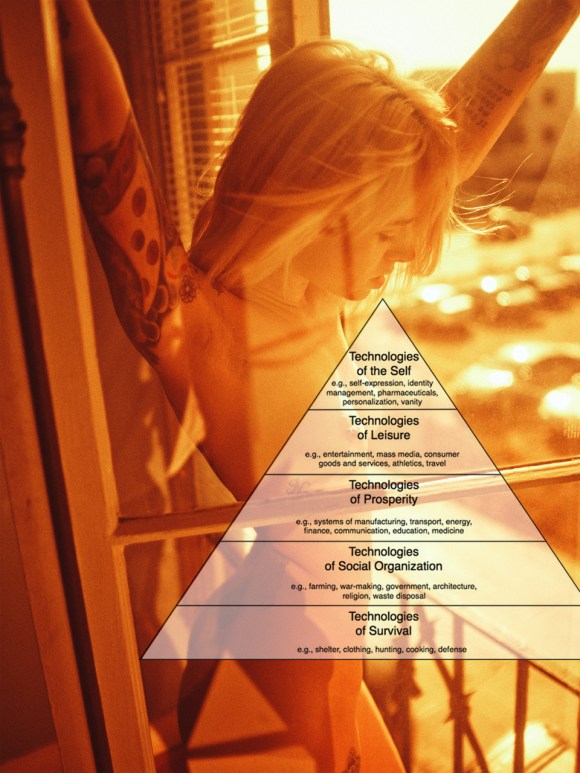
…there’s a Hierarchy of Innovation that runs in parallel with Abraham Maslow’s famous hierarchy of needs.

Maslow argued that human needs progress through five stages, with each new stage requiring the fulfillment of lower-level, or more basic, needs. So first we need to meet our most primitive Physiological needs, and that frees us to focus on our needs for Safety, and once our needs for Safety are met, we can attend to our needs for Belongingness, and then on to our needs for personal Esteem, and finally to our needs for Self-Actualization.

If you look at Maslow’s hierarchy as an inflexible structure, with clear boundaries between its levels, it falls apart. Our needs are messy, and the boundaries between them are porous. A caveman probably pursued self-esteem and self-actualization, to some degree, just as we today spend effort seeking to fulfill our physical needs. But if you look at the hierarchy as a map of human focus, or of emphasis, then it makes sense – and indeed seems to be born out by history. In short: The more comfortable you are, the more time you spend thinking about yourself.

If progress is shaped by human needs, then general shifts in needs would also bring shifts in the nature of technological innovation. The tools we invent would move through the hierarchy of needs, from tools that help safeguard our bodies on up to tools that allow us to modify our internal states, from tools of survival to tools of the self. 

The focus, or emphasis, of innovation moves up through five stages, propelled by shifts in the needs we seek to fulfill. In the beginning come Technologies of Survival (think fire), then Technologies of Social Organization (think cathedral), then Technologies of Prosperity (think steam engine), then technologies of leisure (think TV), and finally Technologies of the Self (think Facebook, or Prozac).

As with Maslow’s hierarchy, you shouldn’t look at my hierarchy as a rigid one. Innovation today continues at all five levels. But the rewards, both monetary and reputational, are greatest at the highest level (Technologies of the Self), which has the effect of shunting investment, attention, and activity in that direction. We’re already physically comfortable, so getting a little more physically comfortable doesn’t seem particularly pressing. We’ve become inward looking, and what we crave are more powerful tools for modifying our internal state or projecting that state outward. An entrepreneur has a greater prospect of fame and riches if he creates, say, a popular social-networking tool than if he creates a faster, more efficient system for mass transit. The arc of innovation, to put a dark spin on it, is toward decadence.

One of the consequences is that, as we move to the top level of the innovation hierarchy, the inventions have less visible, less transformative effects. We’re no longer changing the shape of the physical world or even of society, as it manifests itself in the physical world. We’re altering internal states, transforming the invisible self. Not surprisingly, when you step back and take a broad view, it looks like stagnation – it looks like nothing is changing very much. That’s particularly true when you compare what’s happening today with what happened a hundred years ago, when our focus on Technologies of Prosperity was peaking and our focus on Technologies of Leisure was also rapidly increasing, bringing a highly visible transformation of our physical circumstances.

http://www.roughtype.com/?p=1603

/image: Kesler Tran http://bit.ly/1f23A2K

//  Weighing, and balancing this, against the PR wave spotlighting the reported *decrease* of creativity scores in the U.S., while other countries emphasize and prioritize creativity development. “The Creativity Crisis”  http://www.newsweek.com/creativity-crisis-74665 //

Categories
Uncategorized

“Nature loves courage. You make the commitment and nature will respond to that commitment by removing impossible obstacles.

Dream the impossible dream and the world will not grind you under, it will lift you up.

This is the trick. This is what all these teachers and philosophers who really counted, who really touched the alchemical gold, this is what they understood. This is the shamanic dance in the waterfall. This is how magic is done. By hurling yourself into the abyss and discovering it’s a feather bed.”

Terence McKenna

Categories
Uncategorized

“…data is important … but there’s no replacement for design instincts built on a foundation of experiences that include failures. As engineering and design become ever closer collaborators, the biggest challenge is to make decisions through a careful balance between data and instinct.”

Curious about customer behavior? Use data. 

When it comes to digital products, web and mobile analytics tell us exactly what customers do. Even if customers say they would never, ever, ever buy rainbow suspenders for their avatar, we just never know what people will do when we’re not watching. Better to trust the data and see what people actually do rather than trust what they say they’ll do.

.

Making decisions about product quality? Use instinct.

 To build quality into a product, you have to pay attention to hundreds of details like crafting clear help content or moving that button 3 pixels to the left. None of these small changes individually would prove worthwhile with data. But taken together, they create an overall impression of quality — a halo effect that improves a product in many ways. So when wondering how much time to spend on the details, designers should trust their instincts.

.

Deciding between a small set of options? Use data. 

There’s nothing like an A/B test for making an incremental, tactical improvement. When trying to pick the just-right words for a homepage header, there’s little to be gained in arguing over the right copy. It’s better to test a few versions and pick the right one based on data. The key is to measure the metrics that really matter to the business longer term (such as signups, purchases, or user retention) instead of just measuring clicks.

.

Concerned with long-term impact? Use instinct. 

A good reputation takes years to build, but just one bad experience can destroy it. So when balancing between tactical easily measurable goals like more clicks, and long term goals like trustworthiness, it’s essential to listen carefully to one’s instincts. And if those instincts need a little boost, get curious: go out in the world, talk to people, and gather data.

– @kowitz

http://www.wired.com/opinion/2013/11/design-world-stop-fighting-over-data-vs-instinct/

// /Remembering that instinct often comes from experience. Not always though…

Categories
Uncategorized

Fame has much less to do with intrinsic quality than we believe it does, and much more to do with the characteristics of the people among whom fame spreads.

But most importantly, [the experiment] highlights the role of imitation. The next time you listen to Justin Bieber, and wonder, “Why?” remember that global success has more to do with social imitation than anything else. We have an extraordinary ability and drive to replicate each other’s physical actions and mental processes. Copying is a fundamental part of how we learn, it gives us social cohesion, and it signals group affiliation. It is so pervasive that small moments of mimicry can fall outside of our attention, allowing us to misattribute fame. The origin of global fame is primarily the ability of a given system to allow the faithful copying of a given message.

//

We humans are storytelling and story-finding machines: homo narrativus, if you will. In making sense of the world, we look for the shapes of meaningful narratives in everything. Even in science, we enjoy mathematical equations and algorithms because they are a kind of universal story. Fluids—the oceans and atmosphere, the blood in your body, honey—all flow according to a single, beautiful set of equations called the Navier-Stokes equations.

In our everyday, human stories, far away from science, we have a limited (if generous) capacity to entertain randomness—we are certainly not homo probabilisticus. Too many coincidences in a movie or book will render it unbelievable and unpalatable. We would think to ourselves, “that would never happen in real life!” This skews our stories. We tend to find or create story threads where there are none. While it can sometimes be useful to err on the side of causality, the fact remains that our tendency toward teleological explanations often oversteps the evidence.

We also instinctively build our stories around individuals.

//

But social groups are far more complicated than any individual story. Networked, distributed, conflicting, and changing, they do not simply map onto an individual. For this reason, it’s unnatural and very difficult to put ourselves into the collective minds of groups. Even a group of two is too much—we have to side with one person or switch between points of view. We are embodied stories of one.

So, when we discuss groups, we are left without metaphor. What do we do as a result? We force our single-body stories onto them: Groups become one dominant person—a monarch, the President, Michael Jordan—plus a supporting cast.

These two traits—our compulsion to tell stories, and our bias towards the individual—conspire to ruin our intuitive understanding of fame. They cause us to believe that fame is earned, that it is the result of the intrinsic properties of the famous person or object. 

http://www.salon.com/2013/09/07/nobody_whos_famous_deserves_to_be_partner/

Categories
Uncategorized

wishing, always.

Categories
Uncategorized

There’s something wonderful about single purpose objects. It’s why we prefer spoons and forks to sporks and why we still love physical books.

Our digital devices, on the other hand, try to do it all by recreating our entire world within the digital ecosystem. And so, to use any function of our infinite-purpose-devices, we must choose to leave our real world and engage in the digital world.

But what if instead of trying to put our world in our devices, we met halfway, and created technology that complemented our world.

When interfaces move out of our bags and pockets and into the world around us, we create technology that stops competing with our real world and begins harmonizing with it. When we remove restrictions from interfaces, we have the opportunity to create experiences that blur the line between the technological and the physical in a positive, harmony-inducing way. Our tech becomes like the best physical objects in our lives, enhancing our experience while meshing with the world we already know.

http://www.nirandfar.com/2013/10/in-10-years-we-wont-use-personal-technology.html