Categories
Uncategorized

Once upon a time it was easy buying products.

We’re talking 150 years ago here. You went to the guy who sold soap. Maybe he had a shop. You bought the soap off the guy. If he was a nice chap, then even better. Product and seller bound up in a small but pleasant experience.

Then brands came along. Layers of veneer were added – emotional benefits, empty promises and, in the case of TV advertising, metaphorical journeys that attached all sorts of mystical significance to what was, most likely, still a bar of soap.

What I find really interesting, exciting and energizing about the marketing landscape today is that these layers of artifice are being stripped away. You can’t get away with bullshit any more. If people want to find out more about a brand, they can go online and see if the reality and behaviour of the brand lives up to the message.

If the walk doesn’t measure up to the talk then people will just switch off and move on.

We are living in a world where non-fiction is as important as fiction. Where brands’ behaviours more important than what they say about themselves and the experiences that they create are more important than the metaphors that they weave.

Let’s go back to the man in the soap shop. He had two things at his disposal. His product and his personality. He wasn’t messaging. He was a human being. For sure he could be charming. A twinkle in his eye would no doubt persuade his customers to more readily part with their cash but if his customers took the soap home and didn’t get clean and smell nice then his business would be doomed.

I think we’re heading back that way. It’s way more complicated these days, of course but the fundamentals of marketing now are about products and the experiences that we create around them.

And what that boils down to is design.

We have ideas as a differentiator, of course. And we have technology, embedded within the creative process to allow us to create as well as be creative.

But the key to every aspect of the new, digitally-centred marketing world is design.

Back to the man in the soap shop. He, in modern terms had three different design things going on:

Product design. The soap.

Experience design. His shop.

And service design. His schtick.

(These are radical simplifications, I know.)

Modern brands do all of this as well.

Product design is still the king. If what you are selling doesn’t deliver the beef, go home. The packaging has got to be right. The product has got to be right. It’s all got to add up.

Experience design. Retail. Websites. Apps. Events. All of these are spaces, to be architected and perfected to be as frictionless and true to the product and its values as possible.

Service design. People, infrastructure and communication materials. What’s it like when someone engages with you or walks into your store? How do you make them feel? Think of the difference between how you are served by a top-end retailer versus a lower-minded competitor.

Visual design – every touch-point, every interface between a product/brand and its people has got to look right, not dominate and contribute effortlessly to the experience.

Information design. Knowledge is power. Look at the Nike Fuelband. Look at big data. Look at how it produces effective behavior change. We all want our selves to be quantified these days for a reason – it helps us become who we want to become. Beautiful, clear, differentiated information – the dog’s bollocks of non-fiction – is where brands should be playing.

So where does that leave advertising? Whither the sloganeering magician? The alchemist of old? Well, if my hunch is right, on the way out.

Advertising should become another part of the design resurgence: factual, demonstrative of design, pointing to deeper, online experiences, indicative of behaviours and reality. Sure there’ll be metaphor. Sure there’ll be bluster, probably for ever. But good advertising will be part of a bigger whole, an ecosystem of design that surrounds consumers and products.

I’d think of advertising now as Communication Design. To be done carefully, by considered professionals with a balanced view of the bigger marketing picture. Not at the heart of the ecosystem but in its margins.

Design, design, design. If your marketing company isn’t built around it then your days are running out. If you’re getting into our business now, look for the companies that have design at their core.

Design, creativity and technology.

We’re going back to the soap seller in his shop. It’s more complicated now: he’s got a website that recreates the experience of his store, advocates who evangelise about his soap because they’ve met him and tried the product and a funny little man out the back on a computer, creating lovely visualisations of the battle between soap and dirt.

Maybe he’s even developing a new product, hooked into the showering ecosystem? Maybe he’s even looking at disrupting the shower itself, analyzing the scum that comes off people’s bodies down their plughole and telling them about the environmental stresses they are putting their skin through?

Who knows what he’s doing now. What we do know though, is that it’s all about him and his product and what his brand gives to people that adds value to their lives and creates meaningful, two-way relationships with them.

Whatever the man in the shop is doing now, his success won’t be by accident. It will be by design.

Thank God some humanity is seeping back into our industry. It’s long overdue. Ironic, though, that it took technology, machines that we invented, to make it happen.

– George Prest, dropping knowledge. http://bit.ly/RGGoxJ

Categories
Uncategorized

“A great inferiority of beauty gives pain to a person conversant in the highest excellence of the kind, and is for that reason pronounced a deformity.”

– Hume

Categories
Uncategorized

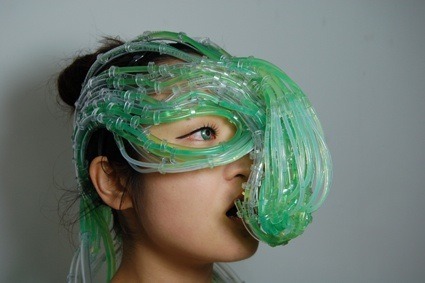
The state of California won’t let me mod like this. 

Categories
Uncategorized

“I think extravagance in your life takes energy from the possible extravagances of your mind.” -poet laureate Kay Ryan

Begging to differ. Hustlers can do both, baby. 

Categories
Uncategorized
  • Pin controls to the left and right edges for easy thumb access on both tablets and hybrids.
  • Favor the left for primary controls. Most index-finger users use their right hand for poking the canvas, leaving the left hand in place for thumb navigation.
  • Treat hover as an enhancement, not a requirement.
  • Make sure all touch targets are large enough to accommodate fat fingers.
Categories
Uncategorized

We automatically interpret all of our experiences without realizing it. Are they good experiences, bad ones, what do they mean and so on?

We do this without much thought, if any, to what the interpretations mean. For instance, if someone bumps into you, you wonder why. The event of her bumping into you is neutral in itself. It has no meaning. It’s your interpretation of the bumping that gives it meaning, and this meaning shapes your perception of the experience.

You may interpret the “bump” as rude behavior. You may interpret her as being deliberately aggressive, or you may feel you are of such little consequence that you’re deliberately unnoticed and bumped around by others. Or you may choose to use the experience as an example of feminist aggression, or you may interpret the bump as her way of flirting with you.

Your interpretation of the experience determines your perception.

// How can we utilize this phenomenon in designing experiences?

Categories
Uncategorized

“Balancing being right and being employed… can be a challenge.”    

It’s not as simplistic as it sounds. Take on the challenge. It’s good for your soul. And creativity.

Categories
Uncategorized

Biden-laughs and Ryan-abs, Big Birds and binders and bayonets: There is something fascinating when an event as stodgily ceremonial as the presidential campaign is run through the lulz-filter of social media, secreting a hallucination of phrases and images and videos and, of course, gifs. An army is at the ready to spin off a gag at every turn, to propagate the joke to maximum scope; digital arpeggiations of candidate goofs and campaign blunders are transmitted from host to host through a mere caress of the touch-sensitive screen. Watching debates with that second screen of fast-moving social media streams and text-input boxes begging our thoughts has positioned many of us as hunters for the most shareable, memeiest content, ready to pounce at something, anything, and in the process, changing the overall narrative of an event. We’ve developed a kind of meme literacy, a habit of intuiting in real time the potential virality of a speech act — to hear retweets inside words.

Campaigns can’t plan memes. Instead, the campaigns can merely react to them.

But nearly any attempt on the part of the campaigns to manufacture virality fails. The memorable memes are those that seem to authentically emerge from the bottom up, their very spontaneity serving as evidence of something genuine.

Analyses of memes that examine their specific content at face value often miss that virtually all election-related memes are inherently a critique of the election in general. In a moment where trust and favorability in politics is near an all-time low, the political statements we make about the presidential election increasingly need to account for the absurdity of the process, from the behavior of the campaigns themselves to the mainstream coverage of them. One of the most common narratives about presidential conventions, commercials, and debates is what silly performances they are. We all know that style is as important as substance, that the “winner” of a debate isn’t the one with the strongest logic, and that both candidates are telling such a slanted story that accepting anything uttered as fact is a sure sign of naiveté. Presidential “debates” are rightly mocked as mere recital of many scripted mini-speeches rather than the back-and-forth exchange of ideas the term debate should conjure.

Because of this frustration, many stand ready to find any bit of authenticity, any deviation from the script and scream it to the crowd, hashtag and all.

What is essential here is that what goes viral isn’t what is most accurate but rather the sort of information individuals to want to be a part of — that demonstrates we are in the know and offers us the best opportunities to add our own two cents along the way in comments and likes. Look: I know about the Binders Full of Women Tumblr! I found the funniest Big Bird captioned photo! I have just the best GIF of Biden laughing you’d ever want to see!

Sifting…
Categories
Uncategorized

Guiltless Excuses mobile app by Pei-Ying Lin.

Link to your fb account and generate countless excuses. And introduces the idea of “Excuse Credit” which is linked to your popularity within your community. Also has an event radar so you can successfully navigate around them.

A charming attempt to create a seemingly utopian social network application which actually creates new kinds of pressure.

Categories
Uncategorized

…an enlightened observation about people who are “right a lot”.

People who were right a lot of the time were people who often changed their minds. Consistency of thought isn’t a particularly positive trait. It’s perfectly healthy — encouraged, even — to have an idea tomorrow that contradicted your idea today.

It’s been observed that the smartest people are constantly revising their understanding, reconsidering a problem they thought they’d already solved. They’re open to new points of view, new information, new ideas, contradictions, and challenges to their own way of thinking.
This doesn’t mean you shouldn’t have a well formed point of view, but it means you should consider your point of view as temporary.

What trait signified someone who was wrong a lot of the time?

Someone obsessed with details that only support one point of view. If someone can’t climb out of the details, and see the bigger picture from multiple angles, they’re often wrong most of the time.

Great advice.

Jason Fried sharing bits from the Jeff Bezos Q&A at 37 Signals