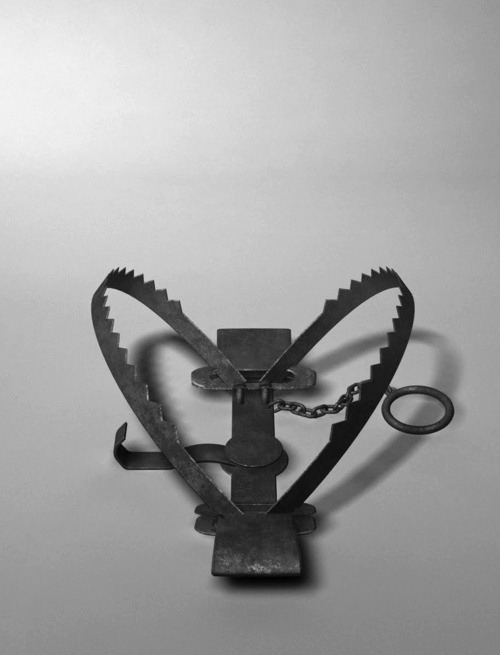
And this is why Zadie Smith is on my short list of heroes…
It might be useful to distinguish between pleasure and joy. But maybe everybody does this very easily, all the time, and only I am confused. A lot of people seem to feel that joy is only the most intense version of pleasure, arrived at by the same road—you simply have to go a little further down the track. That has not been my experience. And if you asked me if I wanted more joyful experiences in my life, I wouldn’t be at all sure I did, exactly because it proves such a difficult emotion to manage. It’s not at all obvious to me how we should make an accommodation between joy and the rest of our everyday lives.
Perhaps the first thing to say is that I experience at least a little pleasure every day. I wonder if this is more than the usual amount? It was the same even in childhood when most people are miserable. I don’t think this is because so many wonderful things happen to me but rather that the small things go a long way. I seem to get more than the ordinary satisfaction out of food, for example—any old food. An egg sandwich from one of these grimy food vans on Washington Square has the genuine power to turn my day around. Whatever is put in front of me, foodwise, will usually get a five-star review.
You’d think that people would like to cook for, or eat with, me—in fact I’m told it’s boring. Where there is no discernment there can be no awareness of expertise or gratitude for special effort. “Don’t say that was delicious,” my husband warns, “you say everything’s delicious.” “But it was delicious.” It drives him crazy. All day long I can look forward to a popsicle. The persistent anxiety that fills the rest of my life is calmed for as long as I have the flavor of something good in my mouth. And though it’s true that when the flavor is finished the anxiety returns, we do not have so many reliable sources of pleasure in this life as to turn our nose up at one that is so readily available, especially here in America. A pineapple popsicle. Even the great anxiety of writing can be stilled for the eight minutes it takes to eat a pineapple popsicle.
My other source of daily pleasure is—but I wish I had a better way of putting it—”other people’s faces.” A red-headed girl, with a marvelous large nose she probably hates, and green eyes and that sun-shy complexion composed more of freckles than skin. Or a heavyset grown man, smoking a cigarette in the rain, with a soggy mustache, above which, a surprise—the keen eyes, snub nose, and cherub mouth of his own eight-year-old self. Upon leaving the library at the end of the day I will walk a little more quickly to the apartment to tell my husband about an angular, cat-eyed teenager, in skinny jeans and stacked-heel boots, a perfectly ordinary gray sweatshirt, last night’s makeup, and a silky Pocahontas wig slightly askew over his own Afro. He was sashaying down the street, plaits flying, using the whole of Broadway as his personal catwalk. “Miss Thang, but off duty.” I add this for clarity, but my husband nods a little impatiently; there was no need for the addition. My husband is also a professional gawker.
The advice one finds in ladies’ magazines is usually to be feared, but there is something in that old chestnut: “shared interests.” It does help. I like to hear about the Chinese girl he saw in the hall, carrying a large medical textbook, so beautiful she looked like an illustration. Or the tall Kenyan in the elevator whose elongated physical elegance reduced every other nearby body to the shrunken, gnarly status of a troll. Usually I will not have seen these people—my husband works on the eighth floor of the library, I work on the fifth—but simply hearing them described can be almost as much a pleasure as encountering them myself. More pleasurable still is when we recreate the walks or gestures or voices of these strangers, or whole conversations—between two people in the queue for the ATM, or two students on a bench near the fountain.
And then there are all the many things that the dog does and says, entirely anthropomorphized and usually offensive, which express the universe of things we ourselves cannot do or say, to each other or to other people. “You’re being the dog,” our child said recently, surprising us. She is almost three and all our private languages are losing their privacy and becoming known to her. Of course, we knew she would eventually become fully conscious, and that before this happened we would have to give up arguing, smoking, eating meat, using the Internet, talking about other people’s faces, and voicing the dog, but now the time has come, she is fully aware, and we find ourselves unable to change. “Stop being the dog,” she said, “it’s very silly,” and for the first time in eight years we looked at the dog and were ashamed.
Occasionally the child, too, is a pleasure, though mostly she is a joy, which means in fact she gives us not much pleasure at all, but rather that strange admixture of terror, pain, and delight that I have come to recognize as joy, and now must find some way to live with daily. This is a new problem. Until quite recently I had known joy only five times in my life, perhaps six, and each time tried to forget it soon after it happened, out of the fear that the memory of it would dement and destroy everything else.
Let’s call it six. Three of those times I was in love, but only once was the love viable, or likely to bring me any pleasure in the long run. Twice I was on drugs—of quite different kinds. Once I was in water, once on a train, once sitting on a high wall, once on a high hill, once in a nightclub, and once in a hospital bed. It is hard to arrive at generalities in the face of such a small and varied collection of data. The uncertain item is the nightclub, and because it was essentially a communal experience I feel I can open the question out to the floor. I am addressing this to my fellow Britons in particular. Fellow Britons! Those of you, that is, who were fortunate enough to take the first generation of the amphetamine ecstasy and yet experience none of the adverse, occasionally lethal reactions we now know others suffered—yes, for you people I have a question. Was that joy?
I am especially interested to hear from anyone who happened to be in the Fabric club, near the old Smithfield meat market, on a night sometime in the year 1999 (I’m sorry I can’t be more specific) when the DJ mixed “Can I Kick It?” and then “Smells Like Teen Spirit” into the deep house track he had been seeming to play exclusively for the previous four hours. I myself was wandering out of the cavernous unisex (!) toilets wishing I could find my friend Sarah, or if not her, my friend Warren, or if not him, anyone who would take pity on a girl who had taken and was about to come up on ecstasy who had lost everyone and everything, including her handbag. I stumbled back into the fray.
Most of the men were topless, and most of the women, like me, wore strange aprons, fashionable at the time, that covered just the front of one’s torso, and only remained decent by means of a few weak-looking strings tied in dainty bows behind. I pushed through this crowd of sweaty bare backs, despairing, wondering where in a super club one might bed down for the night (the stairs? the fire exit?). But everything I tried to look at quickly shattered and arranged itself in a series of patterned fragments, as if I were living in a kaleidoscope. Where was I trying to get to anyway? There was no longer any “bar” or “chill-out zone”—there was only dance floor. All was dance floor. Everybody danced. I stood still, oppressed on all sides by dancing, quite sure I was about to go out of my mind.
Then suddenly I could hear Q-Tip—blessed Q-Tip!—not a synthesizer, not a vocoder, but Q-Tip, with his human voice, rapping over a human beat. And the top of my skull opened to let human Q-Tip in, and a rail-thin man with enormous eyes reached across a sea of bodies for my hand. He kept asking me the same thing over and over: You feeling it? I was. My ridiculous heels were killing me, I was terrified I might die, yet I felt simultaneously overwhelmed with delight that “Can I Kick It?” should happen to be playing at this precise moment in the history of the world, and was now morphing into “Smells Like Teen Spirit.” I took the man’s hand. The top of my head flew away. We danced and danced. We gave ourselves up to joy.
Years later, while listening to a song called “Weak Become Heroes” by the British artist The Streets I found this experience almost perfectly recreated in rhyme, and realized that just as most American children alive in 1969 saw the moon landings, nearly every Briton between sixteen and thirty in the 1990s met some version of the skinny pill head I came across that night in Fabric. The name The Streets gives him is “European Bob.” I suspect he is an archetypal figure of my generation. The character “Super Hans” in the British TV comedy Peep Show is another example of the breed, though it might be more accurate to say Super Hans is European Bob in “old” age (forty). I don’t remember the name of my particular pill head, but will call him “Smiley.” He was one of these strangers you met exclusively on dance floors, or else on a beach in Ibiza. They tended to have inexplicable nicknames, no home or family you could ever identify, a limitless capacity for drug-taking, and a universal feeling of goodwill toward all men and women, no matter their color, creed, or state of inebriation.
Their most endearing quality was their generosity. For the length of one night Smiley would do anything at all for you. Find you a cab, walk miles through the early morning streets looking for food, hold your hair as you threw up, and listen to you complain at great length about your parents and friends—agreeing with all your grievances—though every soul involved in these disputes was completely unknown to him. Contrary to your initial suspicions Smiley did not want to sleep with you, rob you, or con you in any way. It was simply intensely important to him that you had a good time, tonight, with him. “How you feeling?” was Smiley’s perennial question. “You feeling it yet? I’m feeling it. You feeling it yet?” And that you should feel it seemed almost more important to him than that he should.
Was that joy? Probably not. But it mimicked joy’s conditions pretty well. It included, in minor form, the great struggle that tends to precede joy, and the feeling—once one is “in” joy—that the experiencing subject has somehow “entered” the emotion, and disappeared. I “have” pleasure, it is a feeling I want to experience and own. A beach holiday is a pleasure. A new dress is a pleasure. But on that dance floor I was joy, or some small piece of joy, with all these other hundreds of people who were also a part of joy.
The Smileys, in their way, must have recognized the vital difference; it would explain their great concern with other people’s experience. For as long as that high lasted, they seemed to pass beyond their own egos. And it might really have been joy if the next morning didn’t always arrive. I don’t just mean the deathly headache, the blurred vision, and the stomach cramps. What really destroyed the possibility that this had been joy was the replaying in one’s mind of the actual events of the previous night, and the brutal recognition that every moment of sublimity—every conversation that had seemed to touch upon the meaning of life, every tune that had appeared a masterwork—had no substance whatsoever now, here, in the harsh light of the morning. The final indignity came when you dragged yourself finally from your bed and went into the living room. There, on your mother’s sofa—in the place of that jester spirit-animal savior person you thought you’d met last night—someone had left a crushingly boring skinny pill head, already smoking a joint, who wanted to borrow twenty quid for a cab.
It wasn’t all a waste of time though. At the neural level, such experiences gave you a clue about what joy not-under-the-influence would feel like. Helped you learn to recognize joy, when it arrived. I suppose a neuroscientist could explain in very clear terms why the moment after giving birth can feel ecstatic, or swimming in a Welsh mountain lake with somebody dear to you. Perhaps the same synapses that ecstasy falsely twanged are twanged authentically by fresh water, certain epidurals, and oxytocin. And if, while sitting on a high hill in the South of France, someone who has access to a phone comes dashing up the slope to inform you that two years of tension, tedious study, and academic anxiety have not been in vain—perhaps again these same synapses or whatever they are do their happy dance.
We certainly don’t need to be neuroscientists to know that wild romantic crushes—especially if they are fraught with danger—do something ecstatic to our brains, though like the pills that share the name, horror and disappointment are usually not far behind. When my wild crush came, we wandered around a museum for so long it closed without us noticing; stuck in the grounds we climbed a high wall and, finding it higher on its other side, considered our options: broken ankles or a long night sleeping on a stone lion. In the end a passerby helped us down, and things turned prosaic and, after a few months, fizzled out. What looked like love had just been teen spirit. But what a wonderful thing, to sit on a high wall, dizzy with joy, and think nothing of breaking your ankles.
Real love came much later. It lay at the end of a long and arduous road, and up to the very last moment I had been convinced it wouldn’t happen. I was so surprised by its arrival, so unprepared, that on the day it arrived I had already arranged for us to visit the Holocaust museum at Auschwitz. You were holding my feet on the train to the bus that would take us there. We were heading toward all that makes life intolerable, feeling the only thing that makes it worthwhile. That was joy. But it’s no good thinking about or discussing it. It has no place next to the furious argument about who cleaned the house or picked up the child. It is irrelevant when sitting peacefully, watching an old movie, or doing an impression of two old ladies in a shop, or as I eat a popsicle while you scowl at me, or when working on different floors of the library. It doesn’t fit with the everyday. The thing no one ever tells you about joy is that it has very little real pleasure in it. And yet if it hadn’t happened at all, at least once, how would we live?
A final thought: sometimes joy multiplies itself dangerously. Children are the infamous example. Isn’t it bad enough that the beloved, with whom you have experienced genuine joy, will eventually be lost to you? Why add to this nightmare the child, whose loss, if it ever happened, would mean nothing less than your total annihilation? It should be noted that an equally dangerous joy, for many people, is the dog or the cat, relationships with animals being in some sense intensified by guaranteed finitude. You hope to leave this world before your child. You are quite certain your dog will leave before you do. Joy is such a human madness.
The writer Julian Barnes, considering mourning, once said, “It hurts just as much as it is worth.” In fact, it was a friend of his who wrote the line in a letter of condolence, and Julian told it to my husband, who told it to me. For months afterward these words stuck with both of us, so clear and so brutal. It hurts just as much as it is worth. What an arrangement. Why would anyone accept such a crazy deal? Surely if we were sane and reasonable we would every time choose a pleasure over a joy, as animals themselves sensibly do. The end of a pleasure brings no great harm to anyone, after all, and can always be replaced with another of more or less equal worth.

 Wandering Wandering Star