Categories
Uncategorized

No matter what you do in L.A., your behavior is appropriate for the city. Los Angeles has no assumed correct mode of use. You can have fake breasts and drive a Ford Mustang – or you can grow a beard, weigh 300 pounds, and read Christian science fiction novels. Either way, you’re fine: that’s just how it works. You can watch Cops all day or you can be a porn star or you can be a Caltech physicist. You can listen to Carcass – or you can listen to Pat Robertson. Or both. 

That’s how we dooz it. 

L.A. is the apocalypse: it’s you and a bunch of parking lots. No one’s going to save you; no one’s looking out for you. It’s the only city I know where that’s the explicit premise of living there – that’s the deal you make when you move to L.A. 

The city, ironically, is emotionally authentic. 

It says: no one loves you; you’re the least important person in the room; get over it.

What matters is what you do there. 

And maybe that means renting Hot Fuzz and eating too many pretzels; or maybe that means driving a Prius out to Malibu and surfing with Daryl Hannah as a means of protesting something; or maybe that means buying everything Fredric Jameson has ever written and even underlining significant passages as you visit the Westin Bonaventura. Maybe that just means getting into skateboarding, or into E!, or into Zen, Kabbalah, and Christian mysticism; or maybe you’ll plunge yourself into gin-fueled all night Frank Sinatra marathons – or you’ll lift weights and check email every two minutes on your Blackberry and watch old Bruce Willis films. 

Who cares? 

Literally no one cares, is the answer. No one cares. You’re alone in the world. 

L.A. is explicit about that. 

If you can’t handle a huge landscape made entirely from concrete, interspersed with 24-hour drugstores stocked with medications you don’t need, then don’t move there. 

It’s you and a bunch of parking lots. 

You’ll see Al Pacino in a traffic jam, wearing a stocking cap; you’ll see Cameron Diaz in the check-out line at Whole Foods, giggling through a mask of reptilian skin; you’ll see Harry Shearer buying bulk shrimp. 

The whole thing is ridiculous. It’s the most ridiculous city in the world – but everyone who lives there knows that. No one thinks that L.A. “works,” or that it’s well-designed, or that it’s perfectly functional, or even that it makes sense to have put it there in the first place; they just think it’s interesting. And they have fun there. 

And the huge irony is that Southern California is where you can actually do what you want to do; you can just relax and be ridiculous. In L.A. you don’t have to be embarrassed by yourself. You’re not driven into a state of endless, vaguely militarized self-justification by your xenophobic neighbors. 

You’ve got a surgically pinched, thin Michael Jackson nose? You’ve got a goatee and a trucker hat? You’ve got a million-dollar job and a Bentley? You’ve got to be at work at the local doughnut shop before 6am? Or maybe you’ve got 16 kids and an addiction to Yoo-Hoo – who cares?

It doesn’t matter.

Los Angeles is where you confront the objective fact that you mean nothing; the desert, the ocean, the tectonic plates, the clear skies, the sun itself, the Hollywood Walk of Fame – even the parking lots: everything there somehow precedes you, even new construction sites, and it’s bigger than you and more abstract than you and indifferent to you. You don’t matter. You’re free.

In Los Angeles you can be standing next to another human being but you may as well be standing next to a geological formation. Whatever that thing is, it doesn’t care about you. And you don’t care about it. Get over it. You’re alone in the world. Do something interesting. 

Do what you actually want to do – even if that means reading P.D. James or getting your nails done or re-oiling car parts in your backyard. 

Because no one cares. 

In L.A. you can grow Fabio hair and go to the Arclight and not be embarrassed by yourself. Every mode of living is appropriate for L.A. You can do what you want. 

And I don’t just mean that Los Angeles is some friendly bastion of cultural diversity and so we should celebrate it on that level and be done with it; I mean that Los Angeles is the confrontation with the void. It is the void. It’s the confrontation with astronomy through near-constant sunlight and the inhuman radiative cancers that result. It’s the confrontation with geology through plate tectonics and buried oil, methane, gravel, tar, and whatever other weird deposits of unknown ancient remains are sitting around down there in the dry and fractured subsurface. It’s a confrontation with the oceanic; with anonymity; with desert time; with endless parking lots. 

And it doesn’t need humanizing. Who cares if you can’t identify with Los Angeles? It doesn’t need to be made human. It’s better than that.

http://bit.ly/R6VxT

Categories
Uncategorized

To look at markets from a personality-based standpoint is to fall prey to the fundamental attribution error. It’s as deadly a trap as is a demographic-based standpoint. What we must do instead is to look at people’s behavioral similarities to discover really valuable markets for product design.

People can be very dissimilar demographically and personality-wise but still have the same basic needs. Imagine two people getting married: one a 45 year old woman and the other a 24 year old man. A traditional marketing and product focus would treat these two people very differently…they are in different life stages, different careers, different family sizes, etc.

But both are doing very similar activities at the moment, and their needs overlap more than anybody else right now. For the activity they’re trying to complete (getting married) they have to do the paperwork, plan a ceremony, hire caterers, invite others, choose a venue, etc. All of these things have extremely similar steps, and a product/service that might support them can come really close to supporting both. There will be differences, of course, in the taste of the two people, but the actual activity at hand is extremely similar.

That’s why the fundamental attribution error is so important…because these two people seem really different. They come from totally different backgrounds, have different goals at the moment, completely different demographics, and opposite personalities. But from a product design standpoint…their needs are almost the same.

So the takeaway is that when designing products we should avoid the fundamental attribution error by emphasizing the situation in which our users find themselves.

What activities are they trying to complete?

What are the constraints of that activity?

What environmental factors change their options?

What are the common friction points for people doing this activity?

By systematically emphasizing the environment in this way we can begin to see the patterns in behavior that result not from personality but from the shared human activities we all take part in.

http://bokardo.com/archives/applying-the-fundamental-attribution-error-to-product-design/

// So, of course, I’m mulling over how fundamental attribution error can help us with the broader marketing strategy for a huge brand that must overcome the equivalent of early negative reviews for an expensive Hollywood film.

Categories
Uncategorized

A good solution will often create more new problems than it solves.

This is why opportunity is infinite.

– @levie

Categories
Uncategorized

“In many shamanic societies, if you came to a medicine person complaining of being disheartened, dispirited, or depressed, they would ask one of four questions: When did you stop dancing? When did you stop singing? When did you stop being enchanted by stories? When did you stop finding comfort in the sweet territory of silence?”

— Gabrielle Roth

Categories
Uncategorized

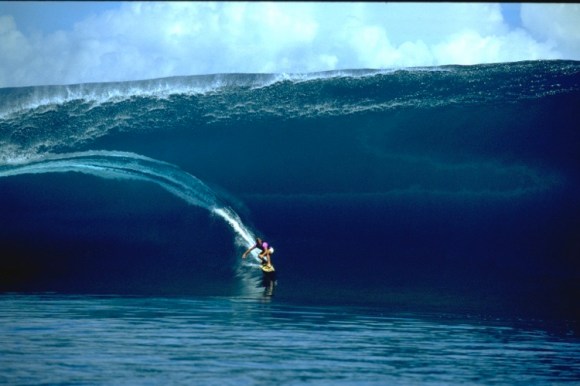
Every so often, in an article or an interview, someone describes me as “fearless.” In my opinion, that’s like calling me an idiot. Fear is a natural response. Without it, we wouldn’t survive. If you’re never scared, then you’ve either never been hurt or you’re completely ignorant. The idea that fear is something to deny is completely misguided.

Forget your emotions around fear for a second and look at the simple reality: It’s an energy source designed to increase performance. Adrenaline and the natural hormones your body creates when you’re scared are more powerful than any drug. The ability to harness it constructively, that’s the trickily part. Once you star to understand fear, it becomes something you can tap into. In my experience, fear usually prompts me to make really good decisions. I’d even go so far as to say that it gives me power. 

How do you use fear to empower yourself? You don’t fight it, and you don’t overanalyze it. Think too much about a frightening situation causes your mind to start chattering and it gets in the way of your body.

Laird Hamilton

Categories
Uncategorized

If you want good type on Retina displays, stop discussing hinting et al. Just search for faces that happen to look good. Like the old days.

Erik Spiekermann
Categories
Uncategorized

Initiating a project, a blog, a wikipedia article, a family journey-these are things that don’t come naturally to many people. The challenge is in initiating something even when you’re not putatively in charge. Not enough people believe they are capable of productive initiative.

At the same time, almost all people believe they are capable of editing, giving feedback or merely criticizing. 

So finding people to fix your typos is easy.

I don’t think the shortage of artists has much to do with the innate ability to create or initiate. I think it has to do with believing that it’s possible and acceptable for you to do it.

We’ve only had these particular doors open wide for a decade or so, and most people have been brainwashed into believing that their job is to copyedit the world, not to design it.

– Seth Godin

Categories
Uncategorized

“We need to have a theory of fun


"how do we make decisions, how do we make trade-offs?” In a kind of desperation we said “we need to have a theory of fun,” like what is fun? How do we decide that expanding three menus on this is better or worse? So we came up with this rule, which is the more ways in which the game responds to a player’s state or player action is more fun. In Quake, you shot a wall and the wall basically ignored you. You saw a little puff, and then there’s no record of your actions. So we said using this simple rule, just one rule, if you shoot a wall it should change.

One of the things that started to drive me crazy in video games is that when I walk into a room, I’m covered with the gore and ichor of a thousand creatures that I have slayed, and the monster in there reacts to me exactly the same. So in Half-Life there’s this whole progression depending upon what you do and how scary you are [to enemies]. Eventually they start running away from you, they start talking about you, and that was just another example of having the world respond to you rather than the world kind of being autistic and ignoring everything you’ve done. So then we did Counter-Strike, [and found] the rule we used for Half-Life doesn’t work in a multiplayer game. We got all this weird data, like you put riot shields in and player numbers go up. Then you take riot shields out and player numbers go up. FuckIt’s supposed to go the opposite [direction], right? So we had to come up with a different way.

.

Entertainment as a service was a guiding design principle for us in Counter-Strike. So now we’re in this strange world where we have people who are using the Steam workshop who are making $500,000 per year building items for other customers. In other words, there’s this notion that user-generated content has to be an important part of our thinking. We know of other game developers making more money building content for the workshop than what they get in their day job. One of the things we found is that this notion of a workshop needs to span multiple games. If we’re connecting Skyrimand other games… it’s like this notion that there’s just a game seems to be going away; games are starting to look like an instance of some larger experience.

We’re writing a platform, so you’ll hear us talk about “how do we make the pro players more valuable?” For us that’s a real issue, we actually have to go off and solve engineering problems, because rather than just thinking of them as a pro player, we think of them as a user-generated content person with a particular kind of content that they’re generating. How do we help them reach an audience?

– Gabe Newell (Valve)

Categories
Uncategorized

About to turn the corner into 2013. That momentary tension before thumb and forefinger pinch the clasp open to release the leash. Vibrations. Heartbeat breakbeats. Three quick exhales. And a reminder…  

“People don’t need enormous cars; they need admiration and respect.

They don’t need a constant stream of new clothes; they need to feel that others consider them to be attractive, and they need excitement and variety and beauty.

People don’t need electronic entertainment; they need something interesting to occupy their minds and emotions. And so forth.

Trying to fill real but nonmaterial needs -for identity, community, self-esteem, challenge, love, joy -with material things, is to set up an unquenchable appetite for false solutions to never-satisfied longings.

A society that allows itself to admit and articulate its nonmaterial human needs, and to find nonmaterial ways to satisfy them, world require much lower material and energy throughputs and would provide much higher levels of human fulfillment.”

-Donella H. Meadows, The Limits to Growth: The 30-Year Update

Categories
Uncategorized

Wondering what the unintended convergence of Social Health, Social Prescription & Latent Gifting Platforms (Pinterest), will look like.