Categories
Uncategorized

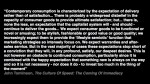
The truth in John Tomlinson’s quote above is profound. Our deepest desires may only be as reliable as the false memories sold to the desperate in Total Recall. And this realization is either the trigger for a marketing grand mal seizure. Or an opportunity to pause and examine our values.

// The Tomlinson block quote is from @mweigel http://bit.ly/10xczRa

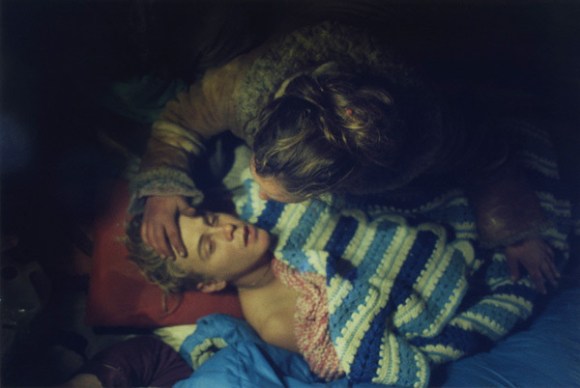
 And the image is from the top step of a broken escalator on Granville Street, Kowloon.//

Categories
Uncategorized

“The great virtue of thought and analysis is that they free us from the necessity of following recipes, and helps us deal with the unexpected, including the imagination to try something new.”

– Harold MCGee, “McGee on Food and Cooking”

Categories
Uncategorized

DISAPPEAR US ALGORITHMS, AESTHETICS, AND THE ARMED FORCES

  • image
Interview with GUY CRAMER about his experiments with digital pattern design

Text CONROY NACHTIGALL 

Amidst the complicated and abundant cultural and political significances that “camo” has acquired over the past half century, we often forget that on the front lines of modern warfare, camouflage is a matter of life and death, just as in Darwin’s theory of natural selection. No matter where you stand on its confounding form and controversial function, camouflage is a powerful assimilative tool: it is a polyvalent social marker, as much in the street as on the catwalk, as seen most recently in the Men’s Spring/Summer 2013 collections by VALENTINO, DRIES VAN NOTEN, and PRINGLE OF SCOTLAND. In the field, it can completely absorb you, incognito, into an environment.

That, at least, is the goal, one that would appear to have been largely taken for granted within the historically design­ and intuition­based creation of army fatigues. How could such an increasingly fundamental aspect of the military’s look and strategy since World War I have been ignored by research in society and technology for so many decades? Enter Guy Cramer, the Canadian paintball champion who decided that the camouflage pattern his tax dollars were paying for wasn’t going to cut it. His first experimental forays into digital pattern design in the early 2000s caught the attention of King Abdullah II of Jordan, among others. Now President and CEO of HyperStealth Biotechnology Corp., Cramer is still pioneering military camouflage based on mathematical fractals,
 a practice that has taken the uniform to the deepest realms of science. Here he offers a glimpse into what is, without a doubt, the only industry in which clothing is dictated by geopolitical, environmental, and neurological factors – where algorithms meet aesthetics meet the Armed Forces.

Conroy Nachtigall: Historically, creating camouflage was seen more as an art. Artists were hired to come up with the design and the patterns looked expressionistic. When the first digital camouflage, CADPAT (Canadian Disruptive Pattern), came out in the 90s, it cut through that. It wasn’t based on an interpretation of what would blend in, but on a scientific approach based on what the eye sees. It didn’t look like it would work, but that didn’t matter because it used the science of visual disruption and not the art form. You saw beyond that. What prompted you to get into camouflage design?

Guy Cramer: I played paint ball, and those paint balls hurt when they hit. Everyone was using the older U.S. Army camouflage. I could tell right away, those guys were standing out. I started to research camouflage and found that the British DPM (Disruptive Pattern Material) was more effective than the camouflage used by the U.S. Army, so I started to wear DPM. All the other guys were getting spotted before me. It got me thinking, “Why is this working, and can it be done better?” I started to understand there was more to it than just the design it was also about tactics. I was critical of the CADPAT camouflage, because it cost millions and took years to develop. I looked at it and thought, “It looks like a kid with graph paper did this.” I improved on what they had done in a couple of hours with a $100 graphics program and posted it on the web. I called it GUYPAT. A few months later the King of Jordan saw this page and basically asked if I could do this for him.

So you took the job with no experience?

I let them know this wasn’t my profession, but that didn’t matter to the King, he liked what I had done. So I looked into the history of camouflage: Why did Canada go digital? Well, they’d gone digital because a gentleman named Lt. Col. Timothy O’Neill – who is now my partner in camouflage design – had come up with the concept for the U.S. Army in the late­70s/early­80s. The U.S. Army did tests proving it to be somewhat effective, yet it never went anywhere. Maybe because it was too artificial looking. The Canadians picked up on it and ran with it. It was only when NATO tested CADPAT and it started beating DPM that everyone took notice. That’s when the U.S. Marine Corps approached the Canadians and basically said, “We want the pattern.” The Canadians said they could have it, as long as they re­colored it. That’s how MARPAT (Marine Pattern) came about.

Then everyone around the world started to look at digital camouflage. If the Canadians and the Americans had done it, there must be something to it. The trials were showing that a Canadian soldier could get 30 percent closer with a digital pattern than he could with his olive­drab uniform.

Part of what makes CADPAT/MARPAT less effective is isoluminance – when colors blend into one another at a tactical distance. If you are a U.S. Marine and you’re at 40 yards, that’s a great pattern to have, at 70 yards the colors isoluminate into one perceived color. If you’re a Navy Seal and you’re two feet away from someone, it’s not a great pattern because it looks so artificial. When we’re designing for regular Army we’re designing for different combat ranges than for Special Forces. There is a very subjective component factored into the close range camouflage. We are trying to blend the science into the art but not the art into the science.

Can you talk a bit about the about the scientific aspect? What prompted the use of algorithms in the first place?

The American military had said, the next step in developing a new and better pattern is to incorporate fractals. A fractal, being a naturally repeating geometric shape, is catalogued and ignored by the brain. If we were to analyze the bushes and trees every time we walked outside we’d be overwhelmed with data. So our subconscious says, “That’s a tree, that’s a bush; that’s this kind of bush, that’s that kind of bush – ignore”. By incorporating those patterns into a camouflage your brain is looking at it and saying – “Ignore.” What you’re trying to do is stop the brain from analyzing an anomaly by making it think that the anomaly actually belongs in the background.

That’s the first thing when designing a pattern – to get the eye to scan right over it. But the brain won’t be tricked forever, it starts to zero in on something else, maybe an arm sticking out. We use different algorithms once the brain starts analyzing the target itself, to conceal that arm properly.

You move the reference points.

Yeah, the joint points, basically. By incorporating that algorithm into a camouflage you’re able to hide the target’s shape better. We use symmetry disruption so the left side doesn’t look the same as the right side. Everything we’re doing in camouflage has a purpose. Prior to us it was solely a matter of intuition.

Camouflage patterns also have different functions. For the Special Forces concealment is paramount, but for the general Army camouflage has periphery purposes – it has to convey a cohesive look and needs to be something a soldier can identify with, it becomes a rallying tool. Is there an aesthetic or subjective element involved as well?

We get everything from – “It looks great, it looks wonderful, it looks effective” – to “Yuck, I hate it.” In the past there was a knee­jerk opposition to the digital patterns. There’s objective data that says it does work better, but there’s also subjective data that says the guys would rather be wearing something else. There are a whole bunch of subjective components to it – aesthetics are definitely a massive part of the decision for the General that signs off on it. We’ve designed some ugly camouflage that was very effective that never went anywhere because it was so ugly. We learned you always have to have that aesthetic appeal in order to win the contract.

What do you do when one of your patterns loses a competition to a pattern you know to be less effective?

It’s unfortunate because the last thing I want is a soldier using something that’s ineffective. When a soldier gets tricked into believing one thing because of the marketing versus what really happens out there, that’s when I get upset. When the military comes out with a pattern that is all about aesthetics and not about effectiveness, that’s when I get upset.

You have a line: the primary reason for effective camouflage is: what you can’t see you can’t hit. Is this part of your motivation?

It’s huge for these guys. If we can give them a few extra seconds then that’s what we want to do, that justifies the Army spending the money. The Air Force routinely spends over $100 million dollars for just one aircraft. One aircraft is equivalent to a large piece of this program and this pattern is for the whole Army. So when the discussion of wasted money comes up – what’s really a waste of money is putting ineffective camouflage on a soldier and sending them into combat. The one they have right now is so bad it doesn’t matter what gets put forward, it would be better, and they know that.

How did ineffective camouflage get there in the first place?

They don’t know. There was no proper research. It was someone at the top that just made a decision, “Looks good, looks like Starship Troopers.”

It’s been a couple of decades now since the end of the Cold War, a tense era but one with a greater sense of certainty. How do you deal with the shifting nature of security needs, with the situations that exist now?

The failure of UCP (Universal Camouflage Pattern, a modification of MARPAT) plays a huge role. Americans have now come to the conclusion that there is not one camouflage for all regions and environments. It doesn’t matter that MultiCam works well in Afghanistan, it doesn’t work well in Northern Europe or tropical regions. This old idea that you can design for the specific environment means that we are being asked to take this to the next level and are now being tasked to develop very environmentally specific patterns regarding the groups we design for. No longer are there just one or two choices for a green environment.

Even with camouflage, there still has to be an element of visual recognition, and it still needs to act as a uniform, to be identifiable.

We have to provide something that is distinctly different than the neighboring countries. When we designed for Jordan, we looked at what Israel used, what Lebanon used, what Syria used. Fractals are great because they are visual components of a mathematical equation, sometimes a very simple one, which can provide a unique pattern that looks different than the usual camouflage used by other countries.

They set the visual parameters?

Yes, in biology we see the same rules applying. Biological techniques served as reference points for the artists who designed camouflage in the past. But artists were looking at them as the end reference points; we were looking at them and saying evolutionary biology has limitations. In nature, you can have stripes or you can have spots. We’ve taken it a step further – we want to apply stripes and spots. It’s not about mimicry, it’s about getting something to look like it belongs in the background, but also in a lot of different backgrounds.

Too often design based on biomimicry actively looks for cases when nature and design correlate. The big thing in hunting camouflage used to be a photorealistic collage of twigs and leaves. But animal perception is different. Your approach didn’t rely on mimicry. Photorealistic camouflage looks impressive because it’s so detailed, but the intense marketing push leads me to believe it’s not effective.

The popularity of photorealistic camouflage has to do with its aesthetic quality. It makes people look like hunters because that’s what we’ve come to know hunters wear. W.L. GORE and Associates (makers of GoreTex) saw the market saturated with this stuff and they came to us with the idea of developing camouflage from the animal’s perspective. We had been working on hunting camouflage with other hunting apparel companies, but any new patterns renders old ones in their inventory obsolete, so they would drop our patterns even though they knew it was a better product. That’s how business works.

GORE didn’t have a pattern so they weren’t worried about making something obsolete. They wanted to do it differently; they wanted to do it better than it had been done before. They brought in the best animal vision expert, the top camouflage researcher and the top camouflage designer: Dr. Neitz, Dr. O’Neill, and myself.

Is there a difference in how our visual perception works in an urban environment versus a natural one?

The same components come into play but on a different scale. In an urban setting, you’re dealing with big blank walls. How do you create camouflage for a blank wall? The Canadian military wanted camouflage for 10 square blocks in Toronto, Vancouver, and Montréal, which is where they might expect an incident. The colors within that environment are quite limited, so we had photos done from numerous buildings in each location, put them through an algorithm and had the computer tell us what the four common colors were. With the colors selected, we needed a pattern. There’s very little disruption on a flat wall, maybe some grout lines, maybe some texture, but not enough to make a huge difference.

How do you get the human shape to blend in with that background?

After designing about a hundred different patterns, I came up with the two that worked best, CUEPAT­1 and CUEPAT­2. They were very distinct from each other. CUEPAT­1 has traditional detail but not enough detail in clumps so that the eye actually picks up on it.

The clumps look like they make a grid system.

Yes, because you run into that grid system with the angles and corners of buildings. The angles are running at a complete 45 degrees. The dominant angles are the horizontals, and your subconscious will pick up on that. The verticals are minimal because that’s what we see when analyzing the urban data.

What was the other effective urban pattern?

With CUEPAT­2, we created something very different – a depth pattern. The brain has trouble analyzing this pattern because it thinks it’s looking through it. It’s the same effect we’re trying to cause in the animals. The brain perceives depth where there is no real depth.

I saw the video where you were interviewed wearing this pattern, it looked so unique and interesting. I’m attracted to it because it is so odd.

The military didn’t want to move forward with it because it was not a typical camouflage.

If we thought CADPAT was odd at the time, this takes it to a whole other level.

The only reason they moved forward was that it continued to test better than any of the other urban patterns. Reviews from soldiers were mixed and again it may be that initial reaction soldiers have until they warm up to it. The first to see this pattern were the Canadian soldiers who asked themselves if this would be something they would wear, while a few months later in the States, they were saying things like “I would wear it, that looks good.”

Describe the cultural element in how visual disruption works?

It’s more psychological than cultural. The human brain perceives the same things regardless of culture. A Kalahari bushman will see the same thing as a businessman from Johannesburg. However, a country may select a pattern due to cultural perception, this was the case in Malaysia where they selected a very odd pattern of ours, HollowTex. I only later found out that the pattern’s geometry was similar to a configuration they use throughout their culture from curtains, to carpets, to clothing. Does this make it more effective for that culture? Perhaps, if you’re standing in front of those curtains.

The new proposal you’ve submitted is another incarnation of camouflage as we know it: Quantum Stealth, true invisibility. How much of that is going to become the forefront of camouflage?

Quantum Stealth, the light bending technology, will likely be used for the top tier Special Forces. My assumption is it will be used until someone drops it in combat and the enemy reverse engineers it. Then they’ll give it to the whole Army.

Is energy going to be pushed solely into this technology or will there still be a need for printed patterns on fabric?

Printed fabrics will be a staple in our lifetime. Not everyone can afford the new technology. Perhaps the American and the Canadian militaries can, but not the majority of armed forces out there.

There’s also the BAE Systems tank with temperature changing hexagon pixels.

Those are only anti­thermal. Our Quantum Stealth works in visual and thermal spectrums. The ability to bend light is something that would probably already be in production if it wasn’t for that mindset that says, “That’s impossible, you can’t do that.” The idea of bending light is something we do all the time with fiber optic cables. The minute you tell someone that, they say, “Oh yeah, you’re right.” This is just a different way of doing what fiber optic cables do. It’s actually quite an easy system, which requires secrecy.

That’s how that whole system works – it would be pretty easy for something to slip out.

My grandfather always said you have to have a few aces in your hand. When we go into these meetings we’ve got something even better than Quantum Stealth and we only show them bits and pieces of it. What they see is a very raw form of the technology, what we’ve developed is not what we show them.

The carrot and stick act.

That’s how the world works. We’re not trying to blackmail anyone – we’re trying to protect our intellectual property. We want to develop it and make it the best that we can to provide the best security to the soldiers.

So it’s an adaptive process as well. Learning and trying to anticipate problems.

I can only anticipate so many problems. I eventually show someone, typically it’s recently retired Navy Seals, and get their thoughts. There are so many different types of objective tests that would take that guess work out. How did the brain perceive patterns? How long did it take the brain to find them in this photo? That’s the type of testing you want.

How long until light bending material is feasible to issue to the entire Army?

That depends on military command decisions; I can guess that they will initially use it just for Special Forces but someone who makes the decision may feel that there is a greater need to use it for the whole Army. I’ve had media contact me asking for pictures. For reasons of security, I can’t send pictures, but if you were to take a picture of the material within the environment, and one with the material not in the picture, they would look almost identical. And if there was someone standing behind Quantum Stealth you would not see anyone at all. That’s what the material does, it bends light right around, so you’re seeing what’s behind the target, not the target itself.

Is it an object or an actual fabric?

Both. Like the Japanese screen, like a hunting blind. But you can put it right on the clothing itself, and it’s just as effective. We’ve tested it out and it works.

If this got into the wrong hands, it seems like it would be a huge concern, even in the civilian world, it could wreak havoc.

You would think so! That’s how we perceive it, but that’s not the message we’re hearing from the people who make the decisions. If Hollywood took this and turned it into a movie there would be people chasing me in helicopters. It’s ridiculous that there is so little interest from the military for this at this stage, real life is red tape, politics, and budget limitations. It’s frustrating to have something that works so well that no one believes it, then when key people see it, they don’t know where to go with it. Invisibility cloaks don’t fall under any current category within the military.

That does sound frustrating – entering the realm of too good to be true.

A lot of what I know to be true and factual gets picked up by the media as something so far out there that it’s on the fringes. I don’t have the time to correct inaccurate stories each time I come up with something new and I don’t need to prove to the public that it works. I’m trying to prove that these technologies work within the confines of the security establishment, meaning I can’t discuss the real details outside of these groups and still no one on the inside seems to care at this point. Sometimes if it works too well people don’t want to believe it. I’ve run into that more often than not. Now that there is movement on the camouflage and recognition in the industry, some of those people are saying, “Maybe there is something to it, maybe he does know what he’s talking about.”

In my meetings with the military there is often an attitude of, “We can’t do that so you can’t do that.” But it doesn’t change the fact that we can, we have and we are able to repeat the experiments. This is not a one­time anomaly.

Categories
Uncategorized

Google Alert for the Soul


Rationalized identity construction and the postauthentic data self

In this paper, I want to trace changes in the ideological notion of personal authenticity that have been brought on by widespread social media use. Earlier notions of authenticity were premised on a unique interior self that consumerism would help us express, but social media have made that untenable. In response, authenticity is shifting, describing not fidelity to an inner truth about the self but fidelity to the self posited by the synthesis of data captured in social media — what I here call the data self. This sort of decentered authenticity posits a self entirely enmeshed in algorithmic controls, but it may also be the first step toward postauthenticity, in which identity ceases to be conceived as personal property.

“Becoming oneself” has turned into a crappy job — a compulsory low-paying, low-skill job. The promise of modernity, that we might escape the contingent circumstances of our birth and become who we “really are,” has become an injunction to continually work on the self with no hope of ever fully knowing ourselves or feeling fully recognized.

Neoliberal ideology, as Jodi Dean argues in the quote above, effaces boundaries between work and life and requires subjects to continually seek opportunity to prove their creativity and flexibility. Social-media companies have emerged to offer just that, an endless number of opportunities for us to test our creativity and transform everyday life experience into proof of our economic fitness. Social-media profiles may thereby become necessary collateral, mandatory passports to participate in a consumer society gone “social.”

But being oneself was supposed to be joyous self-discovery, not work, not reputation management. Consumerism encouraged the idea that we were born unique individuals and that we could display that uniqueness to the world by buying things. This became the basis of the modern notion of authenticity, one of consumerism’s most successful and desirable products.

The demand for commodified authenticity is an expression of consumers’ nostalgia for a never-existing time when one had total control over the development of one’s identity. That sort of authenticity has always been a fiction, but the very real existence of goods that signify authenticity masked that fact. Consuming authentically could seem to prove fidelity to our “real self.”

Networked sociality threatens that notion. Though social media are sold as means of self-expression that let us articulate our real selves (with our real names!), they are also intrusive, invasive technologies that make surveillance ubiquitous. They dissolve the continuity of personal identity into discontinuous data that can be sold to marketers or recombined to create synthetic truths about us.

Social media are forums where we can test our uniqueness. While this can provide a sense of triumph (congratulations! 20 retweets!), it can also yield paranoia and a constant feeling of self-promoting phoniness as checking one’s reblogs, likes, messages, and comments becomes compulsive.

The calculating self-consciousness cannibalizes authenticity, contravenes spontaneous self-expression. Authenticity starts to merely measure the gap between who we’re trying to be and how we are actually seen rather than stand for some intrinsic essence. And given how social media can decontextualize these authenticity games, we can’t possibly know how large that gap is. It becomes conceivably infinite.

Authenticity as fidelity to an autonomous, unified a priori self becomes untenable. Social media inevitably confront us with our inconsistencies and our poses.

So how does the neoliberal self, in its perpetual state of selling out to maintain economic viability, survive its apparent inauthenticity? How do we regain a feeling of control?

If we maintain a belief in authenticity as fidelity to a static, preconstituted inner truth, we almost have to opt out of social media to salvage our integrity. That’s not an economically viable option, though, so the ideological construct of the “true self” must modulate.

While we can still superficially subscribe to authenticity as an ideal, the exhortation to “be ourselves” has given way to the soft commands to always be measuring ourselves and sharing more information as a means to take that measure. Authenticity is no longer given and proved by unique consumption but established by the volume of one’s productive behavior in social media. We are only what we express and share; what escapes capture is not authentic but irrelevant.

The true self, from this point of view, doesn’t precede the process of being encoded in social media; instead the real self — real in the sense of being influential — emerges through information processing (sharing, being shared, being on a social graph, having recommendations automated, being processed by algorithms, and so on). As information is processed and assimilated to the archive of self, it begins feeding into the algorithmic systems that report back to us the true nature of who we are. (Think: the quantified self, or imagine Pandora, only played out across the entire spectrum of social life.)

So what is real about ourselves depends not some internal ability to think or feel something but the ability to externalize it as processable data. We surrender the prerogative of claiming to be self-created and learn to love the self the data tells us we are. We let Google or Amazon or Facebook tell us what to do next, and then we tweet about it or put it on Tumblr.

The move to a data-self basis for authenticity is a move away from qualitative identity a quantitative one, away from self-surveillance before the fact to self-surveillance after the fact. With the advent of the data self, the self’s basis of reality shifts from the past to the future, where the templates of social media hold the self in place and reveal it as it emerges, giving it coherent form through its searchability and availability to algorithmic processing and collective rating. We don’t even have to act on these recommendations for this self to anchor authenticity. The data self’s existence alone proves our potential. In its quantification, the data self offers a self that appears growable rather than fixed.

The data self no longer seeks meaning through action; it seeks to be processed into meanings. It’s available for audit and pliable to the incentive structures built into social-media platforms. By letting social media capture and process everything, a more reliable, socially authenticated version of the self is produced, better than what our memory can give. Facebook Timeline, for instance, can be seen as an infographic of our personality so compelling that we can comfortably overlook its formulaic nature. Facebook invites us to forget we even had a self before Timeline was there to organize it.

Why would anyone buy in to the data self? First, it fits better with the actual, continual process of individuation we are all always undergoing. No one is as self-contained as the ideology of individualism asserts. Social media seem to afford more control over this interdependent individuation process, making the burden of self-surveillance into a procedure of self-care.

Social media give us a dashboard for reputation management — the smart phone serves as the controller for the real self, while we outsource the finalization of our authentic identity to the machines that report it to us with certitude, filtering what we see and goading us to act along formulized lines. The platforms pre-certify certain courses of action as “authentic.” We’re told how we should be under the guise that it’s already what we have been. The data self can be embraced as normative but not coercive. The coercion happens in the algorithms, not interiorly.

Whereas the old Freudian self aspired to normality but remained a unique product of its dysfunctions, the data self can achieve normality relative to a statistical average profile. Just as the “tastes and interests of people who don’t yet exist within systems can be easily predicted based on the patterns of others,” as danah boyd noted, so can our own future selves.

This makes it so we can’t fall short in expressing a true self, solving any need to be loved for “who we really are” by convincing us we are nobody until algorithms tell us how we were loved already. Social media also match us with those people who can best affirm us. The pleasant Pavolovian buzz of seeing someone respond to one of our social media posts is not merely pleasure at having gained some attention but a momentary reassertion of control over identity.

With all of social media’s feedback loops, we get a comprehensive status update from ourselves, allowing us to consume our own personality as novelty. We effectively set a Google alert for our soul.

The data self allows us to view the self as productive along neoliberalist lines, giving a protocol for handling both too much visibility and too much information. It gives us something practical to do with our experience. Social media instigate what Bernard Stiegler has called a “grammatization of the social”: giving standard forms by which everyday-life experience can be captured and processed to imbue it with legible meaning. It makes that experience “real” in the sense that augments our reputation in the data forms neoliberalism demands. It makes memories into curated cultural capital.

As we see that cultural capital build, we strive to document as much as we can within social media, thus mimicking at the personal, micro-level the macro-level aspirations of Facebook to assimilate all of sociality on its “social graph.” From this totalizing system, we can then derive the comfort that everything will be recorded and be factored in — we don’t need to decide in advance what is significant, what to consume or not consume. With social media as a personal content-management system, we get to consume more than ever, free of the supposed guilt that comes from consuming the wrong stuff or showing off.

The system conveys what Adrian Mackenzie calls “an affect of efficiency,” which complements neoliberalism’s emphasis on self-directed productivity.

Social media’s sharing rituals and feedback loops give the subject momentum, a sense of control over both the flood of information in and the flood of information out. Their ability to capture everyday life becomes not a threatening form of total surveillance but a giant Getting Things Done flowchart for processing life experience. In this system the evaluative criterion of experience is not exposure or authenticity but efficiency. Can it be disposed of?.

The flow of operating social media affords the same “relaxed feeling of control” that Mackenzie claims productivity manuals promise. This is the data self’s consolation prize. Outsourcing identity production and submitting to quantification also begets a feeling of superiority, of winning: As Melissa Gregg argues, “metrics allow the creator-God to be liberated from the fallibility of self and others.”

But in reality, the data self is hardly godlike. If anything, it more closely resembles Deleuze’s concept of the “dividual” — the encoded, premediated subjectivity of the society of control. The data self cannot exist apart from social media and is at the mercy of how they calibrate their filters. The data self may not face the threat of inauthenticity but it’s intensely threatened by the possibility of being disconnected, of having the information flow disrupted. That reflects an underlying terror that there’s something crucial about our lives that can’t actually be expressed — integral things that can’t be processed.

But what the data self may ultimately offer is a bridge to precisely that kind of contentless identity, an identity that doesn’t signify. Rather than being hopelessly trapped in authenticity games, the data self, as an outsourcing of identity, could point toward postauthenticity, in which the momentum of sharing itself is all that needs to be shared, and identity becomes noninterpretable.

The attachment to the unique individual self has been destructive in its defensiveness. That self perceived threats everywhere to the originality that seemed to be the basis of its value. The data self dispenses with originality but retains the need to create value through producing identity and managing reputation. The next move could be to decouple subjectivity from cultural capital and identity, and embrace the idea of identity as ephemeral, with no need of reputation management to qualify for pleasure in the networked society.

Categories
Uncategorized

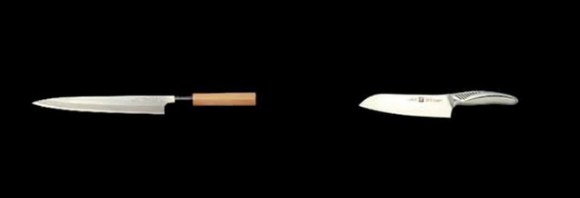
At the end of his talk he does a product comparison between the MUJI product and the non-MUJI product. It is similar to the advertisements that compare a particular brand to a conventional product, except that the comparison is not highlighting shortcomings in the one that have been resolved in the other, but is presenting the sales proposition as a difference in concept.


The non-MUJI product is a kitchen knife chosen to illustrate simplicity western style. Western style simplicity is to be understood as enabling a user with no particular skill to use it. The knife’s handle is shaped to be held in a specific way for effective cutting and to prevent the person using it from harm. On the contrary, Japanese style simplicity, or ‘emptiness’ is about allowing for the complexity of users of different skill to use and grow with the product. A MUJI grip-less knife is presented. Kenya Hara: “The grip-less knife seems to lack common courtesy at first sight. But it is within this universality that the user can hold it from any angle that we find emptiness”  


Kenya Hara describes the MUJI knife’s particular traits as a culturally determined understanding of usability. He is implicitly explaining the brand that is MUJI. MUJI is not simple: it is empty. 

Kenya Hara illustrates in his cerebral way that a brand is a certain vision of customer interaction with the company or its products. Brands are helped by a hint of philosophical insight. They require an understanding of what kind of a relationship is desirable to cultivate and maintain with the people who are concerned. Underlying such a relationship is not just keen business sense but also a conviction to inspire people and enable them to identify with a product, service or organisation.

Categories
Uncategorized

I invite you to become an exhilarationist, which is the opposite of a terrorist: Conspire to unleash blessings on unsuspecting recipients, causing them to feel good. Give anonymous gifts or provide some beauty or healing to people who can’t do you any favors in return.

Before bringing your work as a exhilarationist to strangers, you might want to practice with two close companions. Offer them each a gift that fires up their ambitions. It should not be a practical necessity or consumer fetish, but rather a provocative tool or toy. Give them an imaginative boon they’ve been hesitant to ask for, a beautiful thing that expands their self-image, a surprising intervention that says, “I love the way you move me.

”—Rob Brezsny, Pronoia Is the Antidote for Paranoia

Categories
Uncategorized

There’s two major schools of thought in Japan when it comes to sartorial matters. You have the old masters – Yohji Yamamoto, Issey Miyake and Rei Kawakubo etc – who put Japanese fashion on the map by conquering Paris over thirty years ago. For long, their conceptual designs defined the Japanese ‘look’, with the rest of the world soaking up a fresh and daring take on contemporary fashion. Of late, though, this avant-garde catwalk approach to fashion has been challenged by a modern streetwear wave, a form of fashion that’s more concerned with functional workwear than a dreamy and abstract vision of style. This option has, in the last decade or so, crystallised as a second major Japanese fashion movement, with its very own Yamamotos, Miyakes and Kawakubos at the forefront.

Brands like White Mountaineering, Nanamica, Engineered Garments and Wtaps are all flag-bearers of this aesthetic. As different and unique as they all are, there’s a loose red thread running through their output; focused on traditional heritage, smart sportswear, functional outdoors garment and technical solutions, they all obsess over authentic craftsmanship and qualitative fabrics. The missing brand from that list, the one that should – according to many connoisseurs – be mentioned first, is visvim. The 13-year-old label started out focusing on footwear but soon applied its design and manufacturing philosophy on clothes. Founded and designed by Hiroki Nakamura, visvim sums up the Japanese approach to street and workwear: whatever other designers have done well in the past, we can do better. And they’re not wrong.

The mentality of these brands is often – but far from always – to look at existing design ideas, preferably vintage Americana, and improve the design and construction. Whether it’s a Converse trainer, a M65 jacket or an Oxford shirt, Nakamura adds his own unique quirks and details. When recently visiting the visvim showroom in Paris, I spoke to Nakamura, a genuinely friendly and immensely well-researched designer, about two items from his AW13 collection. Attached to the wall of the loft space, next to an aluminium-coloured caravan from the 50s, were two zipped cardigans. Made with completely different techniques and channeling two clashing cultures, the garments sum up visvim’s commitment to not only speak through garments, but also vice versa. Here’s what Hiroki Nakamura had to say about…

The Modern Manufacturing Process

“I like to mix interesting products and raw materials from all over the world, using various artisans and techniques. Modern manufacturing is great because you can take advantage of quality and price but at the same time, the output of modern manufacturing increasingly looks the same, and I like to see character. I’m working with different artisans and sources to add character to the product. I believe in using natural colours and dyes – I think the natural dying process still has a lot to offer. You won’t get a completely flat dye, it won’t be perfect, there’s an element you cannot predict – but I like that, it’s key to our product.”

The Beige Cowichan Natural Dye F.Z. Cardigan

“I wanted to make the cochineal-dyed sweater looking like an old Americana-inspired piece; rough and strong. I really like them because they have a very human feel, they’re not perfect. The brown parts are mud-dye, from the Amami Islands in Japan, and the white is the sheep’s natural colouring. The yarn is naturally hand-dyed but only in bunches, and that creates an uneven colouring as the dye goes into each bunch differently. The colour is not uniform and creates depth. It’s made with Shetland wool, this yarn was spun on an old machine from the 1920s, which gives the material an unevenness.”

The Indigo Crochet FR Cardigan

“This one is made by French artisans using a traditional French crochet method using a naturally dyed yarn from Japan. I wanted to mix traditional French fine yarn and Japanese natural dyes. I used natural dyed indigo and red cochineal to dye the yarns. We use a Parisian company called Golden Hook for the crocheting. We’ve been working with them for a few season – their artisans are grannies! The cardigan is inspired by an old American calico fabric but made with our own techniques, using natural dye. For this one we use a finer yarn, made using a different machine but, again dyed naturally, and crocheted by an old Grandma called Simone.”

The Inspiration

“In my head, the idea was the concept of old Americana and Navajo. The crosses on the cardigans are from the Navajo. But the cross design is also used in Tibetan cultures. Both cardigans are influenced by Indigenous people using the same motif, which is a very natural and traditional sign. I’m curious about what inspired those old artisans and where they got their ideas from. Sometimes I’m amazed to see such similarities, like with the the Navajo and Tibetan artisans… They’re from completely different continents and time in history but they’re using the same colours, patterns and motifs? I think that’s fascinating.”

The Final Results

“There is beauty in each artisan technique. I wanted to present the strengths of those different processes and mix natural Japanese dyes in with the traditional crochet technique and an Americana-type piece. I would’t necessarily choose between them, they both have depth. Both cardigans are completely handmade. I like them both and think they are both strong pieces with different strengths, each with its own beauty.”

// Love the idea of comparing & contrasting Hiroki’s work + philosophy with Sruli’s…

Categories
Uncategorized

Don’t Be Afraid To Teach Interactions.

A couple of weeks ago, I was using the latest version of the Rdio app and realized that I had no idea how to put a song into a playlist. After hopelessly tapping around, I got a bit annoyed and posted a tweet asking if anyone had figured it out, which is my standard reaction when things aren’t immediately obvious in apps.

But then I thought about an interaction that we’d recently put into place at Foursquare, the long tap checkin. So, curious, I held down my finger on the song title. Lo and behold, a whole set of song action options popped up, including Add to Playlist. Excellent! I added the song and went on my merry way.

Fast-forward a couple of weeks and my friend Keith is also complaining on Twitter about how he can’t find key features in Rdio. People mention the long tap, but it’s obvious there’s a problem; the menu is undiscoverable. The long tap is a graceful solution, but it’s a hidden solution: Rdio needs to teach us.

This illustrates an interesting tension in interaction design. On the one hand, designers want to make obvious interfaces—on some level, in fact, we’re looking to create the Holy Grail of interaction design: apps so fluid, so intuitive, that people naturally have an ‘a-ha’ moment, and there’s never a sense of frustration during onboarding. And that’s great; that’s an amazing goal, and I hope we achieve it.

But at this point in technology, especially with gestural-based stuff, we’re not only working out the kinks, we’re working with a lot of technological, physical disadvantages. For example, there’s no mass commercial computer interface as simple, light, and high-fidelity as pen and paper. The iPad is a solid start, and we can reasonably expect the technology to improve dramatically over the coming decades. But fine, delicate movements and gestures just aren’t supported by technology at this time.

And aside from the technology constraints, we simply do have to create a new set of interactions for new interfaces. Screens have things you can move around, unlike drawings on a sheet of paper, so you’ll be covering up content at some point. Screens can be positioned in a wide variety of spaces, sizes and contexts; if you’re presenting information, you’ll be using more than just your hands but your entire arms and perhaps entire body. So there’s a whole set of interactions, not only you interacting with elements on the screen, but you interactingwith the screen, that simply haven’t been standardized yet.

But that’s okay! Here’s the important part: don’t feel like every single action you design right now, in this Wild West time of interaction design, has to be completely intuitive. There are things we think are intuitive now that we learned using tutorials decades ago. Andrei Herasimchuk pulled up a great old Apple tutorial on how to use a mouse. Do you remember those? Probably not, even if you’re above a certain age, and your kids or siblings (or maybe even you) have likely never seen them. They learned how to use a mouse by watching people instead. People don’t come out of the womb knowing how to use a mouse—they do learn it, at some point—but once the information is out there they can learn so seamlessly it doesn’t matter.

So don’t be afraid. The interactions we have to teach now may be the new standards for the next generation, and they may be much better than what we had before, even if they’re slightly less intuitive to start. Don’t be too hard on yourself, and don’t stop from doing something interesting just because you have to show someone else how to use it. Don’t stifle innovation and interesting gestures. Explain them, and people will remember.

—Timoni

http://blog.timoni.org/post/45842270204/dont-be-afraid-to-teach-interactions

Categories
Uncategorized

“…I am from a bubble in time, a place where these things have always existed. I can tell you what users are going to want, because I have seen, over the course of my short life, so many things fail, and so many unlikely things succeed.”

I grew up in the future

My mom is a futurist, that peculiar subclass of optimists who believe they can see the day after tomorrow coming

When I went home for the 2007 holidays, in my last year of college, my mom’s new favorite phrase was ‘mobile social networking’. It was a big thing in Asia and Africa, she told me, in the throes of writing a several-hundred-page market report.

What is it supposed to be? I asked, getting the milk out of the fridge and making myself some muesli.

Well, she said, you joined a social network on your phone, and then you could express opinions about things. You could send something to your friends, and they would say if they liked it or they didn’t like it — on their phones.

That sounds really stupid, I said.

But, as I don’t think I need to stress, the idea turned out to have legs. In my defence, the first iPhone was still six months away. And though I was one of the first few million users of Facebook, the ‘Like’ button wouldn’t come along for years.

The future arrived much earlier in our house than anywhere else because my mother is an emerging technologies consultant. Her career has included stints as a circus horse groom, a tropical agronomist in Mauritania, and a desktop publisher. But for most of my life she has lived by her unusual ability to see beyond the glitchy demos of new tech to the faint outlines of another reality, just over the horizon. She takes these trembling hatchlings of ideas by the elbow, murmurs reassurances, and runs as fast as she can into the unknown.

When the web and I were both young, in the mid-1990s (with 10,000 pages and a third-grade education to our respective names), video conferencing was my mom’s thing. We had our county’s first T1 fibre-optic line thanks to her, and I grew up in a house full of webcams, shuddering and starting with pictures of strangers in Hong Kong, New York and the Netherlands, to whom I’d have to wave when I got home from school. Later on, when I bought a webcam for the first time, I could not believe you had to pay for them — I thought of them as a readily available natural resource, spilling out from cardboard boxes under beds.

It’s not a particularly comfortable place to be, that knife’s edge between the next big thing and a truly embarrassing evolutionary dead-end

My mother worked with companies who wanted to develop software and hardware for video conferencing, and she wrote reports about the state of the market, which, at that point, was a slender stream of early adopters. Internet connections were so slight, and the hardware so bulky and expensive, that it was slow going — tech start-ups launched with fanfare and sank within months, unable to stay afloat on the ethereal promise of everyone, everywhere, seeing each other talk. The promise, too, of never having to travel for business was not as appealing as the start-ups thought it would be.

But my mom is a futurist, that peculiar subclass of optimists who believe they can see the day after tomorrow coming. In the 1990s, she ordered pens customised with her consultancy name and the slogan: ‘Remember when we could only hear each other?’ Years later, when an unopened box of them surfaced in her office, she laughed and laughed. It would be another several years before Skype with video brought the rest of the world up to speed with her pens.

And by that point, she’d moved on.

It’s not always a particularly comfortable place to be, that knife’s edge between the next big thing and a truly embarrassing evolutionary dead-end. We were constantly wading through early models of doomed technology, and we dressed in, wrote with, and drank out of the detritus of wrecked start-ups. My dad’s favorite polo shirt memorialised a company that had not existed for at least a decade, and for toys we had stress balls and small plastic tops from telecom tradeshows. We had a massive TV-like device mounted with a swiveling webcam before which, at my mother’s behest, I played the clarinet for children gathered in a classroom thousands of miles away. I have not seen one of those in anyone’s living room lately.

In 2004, the year I went to college, one of Forbes’ top tech trends was that consumers were beginning to buy more laptops than desktops. I took a laptop with me, of course — we’d had one or two around the house for years, and I think we bought three more that summer — but I also took a video phone. It was a silvery chunk of plastic with a handset on a cord, a dialpad, and a four-inch screen on a hinge on which I could see my family every week or so. It was the way of the future, and my mom wrote an article about using it to keep up family ties across long distances. The next year, when my sister went away to college, she did not take one. That fateful Skype release had occurred in the intervening 12 months, and the days of dedicated hardware were through.

Strangely enough, after the video revolution came, it no longer seemed to interest my mom. I had not fully grasped it until that point, but her interest was in premature things — full of potential, hampered by bizarre deformities, in need of her talents. Unlike almost every consumer of technology, for her, and for a few others like her, the sleek final product held much less interest, except as a sign that their instincts had been correct.

The bugs, in other words, were more than just bugs. They were opportunities. And without people who have this affinity for the half-formed, we might not get anywhere much at all.

Some years later, as an intern at Popular Science magazine, I was doing research for a retrospective that highlighted the products that had stood the test of time and Googling a quarter century’s worth of inventions featured in the Best of What’s New awards. In an image search for one of the products — I cannot now remember which, and don’t have a record of it, but it must have been a monitor-mounted webcam — I found a small photograph of my mother, in her office in a house we’d long since moved out of. The photo showed her head and shoulders off-center, against a white wall. She was wearing a peach turtleneck and a loose bun, and she stared into the lens of this now-forgotten device with an attentive expression, as though looking for a sign of things to come.

I’ve never thought of my profession as being at all connected to my mother’s. It’s easy to forget that they might seem to be related. Which makes these spooky moments, when I stumble across her signal in the noise, all the more eerie.

My career as a writer about science, and sometimes technology, arose from a particular moment in a college class in cell biology. Late in the semester, we watched a silent movie of a cell dividing. The frenetic activity within the cell paused, and the twinned chromosomes assembled into a straight line. Then they began to pull apart gently, tugged by invisible threads into halves, identical, but destined for existences in separate spheres. I wanted to get closer to that ethereal beauty, to help people understand more about what was happening there — a process still so mysterious, even after decades of research, that our professor was forever coming into class with updates to the textbook. Together, my career and my upbringing have given me something important: a taste for the beautiful and the patience to wait it out, if not the desire to midwife it myself.

These days, the devices strewn around my parents’ apartment are augmented-reality glasses and headsets. The dinner table talk has been about waypoints and layers and standards for content. Mom’s latest projects include turning a city’s publicly available data into an app that lets people see the transit system or sewer pipes projected over the reality before them. She’s been talking to hang-gliders and hot-air-balloonists about whether they would like to see the wind unfurling across the sky ahead. And years before Google Glass was even on the horizon, my mom had me try out a pair of glasses that were to provide an immersive movie theatre experience. (The earbuds mounted on the frames, I regret to say, had not been designed with young women in mind.)

Sometimes I think I could sell my services to these people with the tagline: ‘I come from the future’

But while there have been some industry successes — mainly in the form of games, and the Yelp app, a big standout — augmented reality is going through an awkward adolescent phase. It’s good for PR stunts, like the billboard that went up in Stockholm a couple of years ago and let passersby win McDonald’s food by playing ping-pong with their smartphones. Or the display in Korean subway stations that lets people ‘shop’ for groceries by snapping pictures of QR codes. But will there ever be, as my mom thinks, a secret digital world underlying the real one? A Metaverse visible through your phone, and soon, she hopes, through glasses? Several months ago I went to a release party for a phone loaded with augmented reality features, and the demo was a groan-inducing animation. We’re not there yet.

Sometimes I think I could sell my services to these people with the tagline: ‘I come from the future.’ I don’t have all the hallmarks of a standard techie: my cell phone lives peacefully unconnected to the internet, and I belong to relatively few social networks, but I am from a bubble in time, a place where these things have always existed. I can tell you what users are going to want, because I have seen, over the course of my short life, so many things fail, and so many unlikely things succeed.

That said, I would never want to be too far away from those who live and work perpetually in the vanguard, who have chosen that risky, Schrödinger’s Cat-like existence. Even after growing up with my mother and the remains of a hundred half-baked ideas, such people’s willingness to ride the wave, their foolhardiness and their bravery, still provokes awe in me. It’s not a thing I can profess to understand beyond a basic respect for their guts and their kind of crazy hope that the future will be weird. But that’s something I can get behind.

http://www.aeonmagazine.com/world-views/veronique-greenwood-futurist-childhood/

Categories
Uncategorized

“Often people attempt to live their lives backwards: they try to have more things, or more money, in order to do more of what they want so that they will be happier.

The way it actually works is the reverse. You must first be who you really are, then do what you really need to do, in order to have what you want.”—Margaret Mead