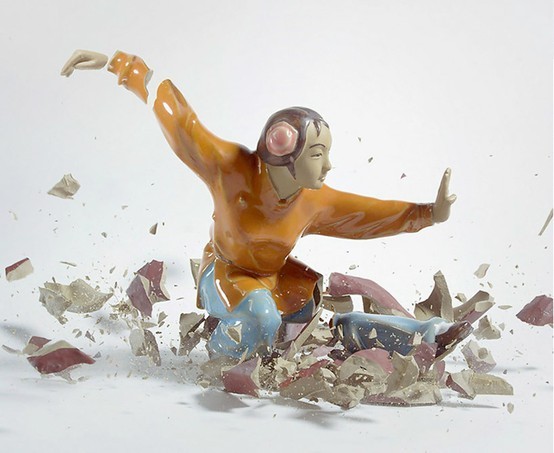
“We need to have a theory of fun"
"how do we make decisions, how do we make trade-offs?” In a kind of desperation we said “we need to have a theory of fun,” like what is fun? How do we decide that expanding three menus on this is better or worse? So we came up with this rule, which is the more ways in which the game responds to a player’s state or player action is more fun. In Quake, you shot a wall and the wall basically ignored you. You saw a little puff, and then there’s no record of your actions. So we said using this simple rule, just one rule, if you shoot a wall it should change.
One of the things that started to drive me crazy in video games is that when I walk into a room, I’m covered with the gore and ichor of a thousand creatures that I have slayed, and the monster in there reacts to me exactly the same. So in Half-Life there’s this whole progression depending upon what you do and how scary you are [to enemies]. Eventually they start running away from you, they start talking about you, and that was just another example of having the world respond to you rather than the world kind of being autistic and ignoring everything you’ve done. So then we did Counter-Strike, [and found] the rule we used for Half-Life doesn’t work in a multiplayer game. We got all this weird data, like you put riot shields in and player numbers go up. Then you take riot shields out and player numbers go up. Fuck! It’s supposed to go the opposite [direction], right? So we had to come up with a different way.
.
Entertainment as a service was a guiding design principle for us in Counter-Strike. So now we’re in this strange world where we have people who are using the Steam workshop who are making $500,000 per year building items for other customers. In other words, there’s this notion that user-generated content has to be an important part of our thinking. We know of other game developers making more money building content for the workshop than what they get in their day job. One of the things we found is that this notion of a workshop needs to span multiple games. If we’re connecting Skyrimand other games… it’s like this notion that there’s just a game seems to be going away; games are starting to look like an instance of some larger experience.
We’re writing a platform, so you’ll hear us talk about “how do we make the pro players more valuable?” For us that’s a real issue, we actually have to go off and solve engineering problems, because rather than just thinking of them as a pro player, we think of them as a user-generated content person with a particular kind of content that they’re generating. How do we help them reach an audience?
– Gabe Newell (Valve)
 Wandering Wandering Star