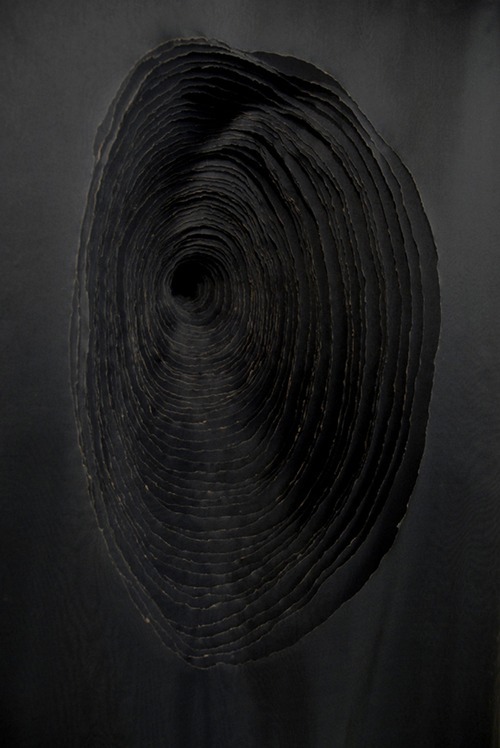
When information enters the mind, it self-organizes into patterns and ruts much like the hot water on butter. New information automatically flows into the preformed grooves. After a while, the channels become so deep it takes only a bit of information to activate an entire channel. This is the pattern recognition and pattern completion process of the brain. Even if much of the information is out of the channel, the pattern will be activated. The mind automatically corrects and completes the information to select and activate a pattern.
This is also why when we sit down and try to will new ideas or solutions; we tend to keep coming up with the same-old, same-old ideas. Information is flowing down the same ruts and grooves making the same-old connections producing the same old ideas over and over again. Even tiny bits of information are enough to activate the same patterns over and over again.
These patterns enable us to simplify and cope with a complex world. These thinking patterns give us precision as we perform repetitive tasks, such as driving an automobile, writing a book, teaching a class or making a sales presentation. Patterns enable us to perform routine tasks rapidly and accurately. When we see something that we have seen before, we understand what it means immediately. We don’t have to spend time studying and analyzing it.
Habits, thinking patterns and routines with which we approach life gradually accumulate until they significantly reduce our awareness of other possibilities. It’s as if a cataract builds over our imagination over time and its effects slowly become obvious, because the accumulation goes almost unnoticed until the cataract reduces our awareness significantly.
How then can we change our thinking patterns?
Think again about the dish of butter with all the preformed channels. Creativity occurs when we tilt the dish in a different direction and force the water (information) to create new channels and make new connections with other channels. These new connections give you different ways to focus your attention and different ways to interpret whatever you are focusing on.
Nature gets variation with genetic mutations. Creative thinkers get variation by conceptually combining dissimilar subjects which changes our thinking patterns and provides us with a variety of alternatives and conjectures.
 Wandering Wandering Star